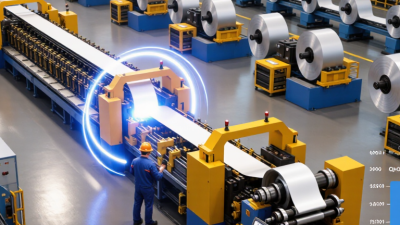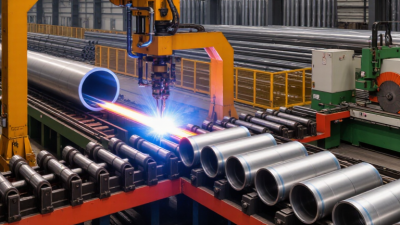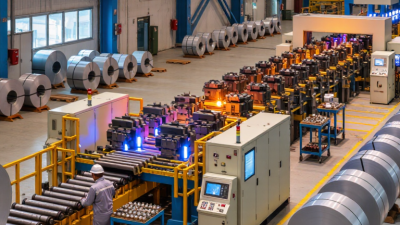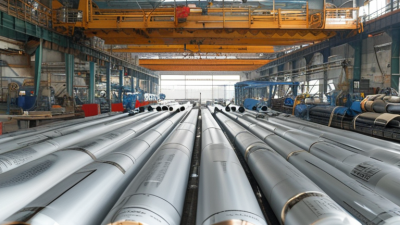
A Tube Mill Making Machine turns flat metal strip into formed, welded, and cut-to-length tube. Choosing the right manufacturer affects more than output speed. It can influence weld consistency, dimensional accuracy, tooling changes, and long-term production costs. A machine that looks impressive in a brochure may still be a poor fit for a specific factory.
Manufacturers worldwide serve different needs, from compact lines for standard round tubing to high-speed systems handling varied sizes and materials. Compare working ranges carefully: strip width, wall thickness, tube diameter, forming stands, welding method, and cut-off accuracy all matter. Ask how quickly operators can change rolls, and whether spare parts and technical support are available in your region. Details matter. A few millimeters can change the suitability of a line.
This guide introduces leading Tube Mill Making Machine manufacturers and the factors buyers can use to assess them. It considers product range, engineering experience, automation, customization, and after-sales service, while recognizing that public specifications do not tell the whole story. Factory visits, sample production, and clear acceptance tests can reveal practical strengths that catalogs miss. Not every line fits. Even a well-known supplier may not match a plant’s material, staffing, or maintenance conditions. The comparison is a starting point, not a substitute for checking requirements with qualified engineers and requesting evidence for performance claims.
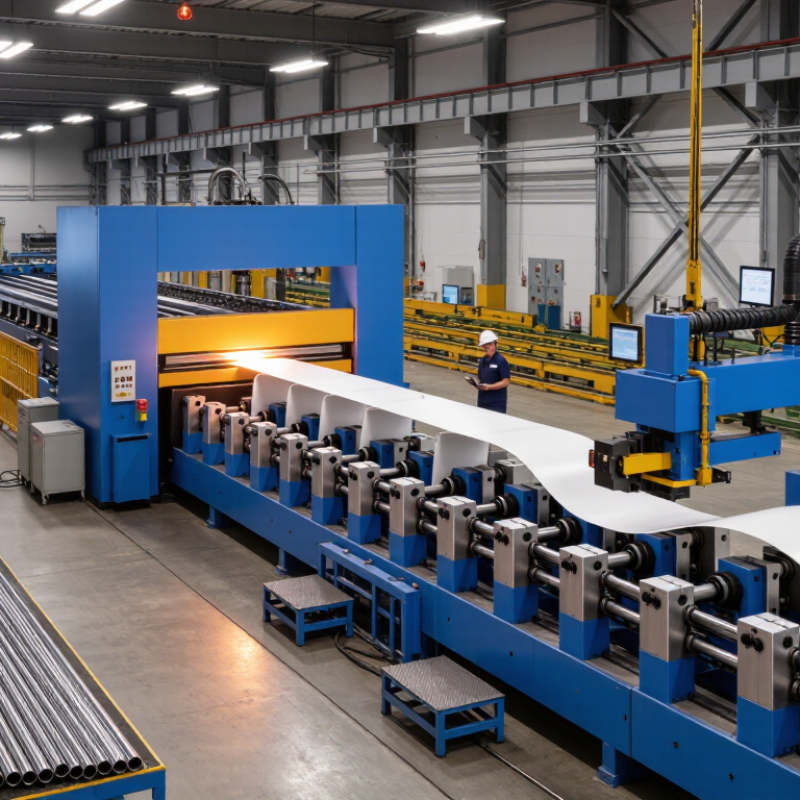
Tube Mill Fundamentals: ERW Forming, High-Frequency Welding, and Sizing
ERW tube making begins with a flat steel strip, gradually shaped by forming rolls into an open cylinder. The edges meet at the welding station, where high-frequency current heats them and pressure forges a solid seam, usually without filler metal. World Steel Association data report 1,892.2 million tonnes of global crude steel production in 2023, illustrating the scale of the material supply behind tube manufacturing. The figure is not tube output, though; that distinction matters. (World Steel in Figures 2024.)
Weld quality depends on more than power settings. Strip edge condition, alignment, line speed, and squeeze pressure all affect the joint. TWI’s technical guidance on high-frequency welding describes how concentrated heating supports rapid joining. After welding, sizing rolls refine outside diameter, roundness, and straightness. A bright seam can still hide a problem. Check weld integrity and dimensions with suitable inspection methods, rather than relying on appearance alone. In practice, small setup changes may cause surprisingly large dimensional shifts.
Tips: Keep strip edges clean and aligned before forming. Track weld settings alongside speed and material thickness. Inspect sizing rolls for wear; a slightly uneven roll can leave a repeating mark down the tube. And review the results. Operators sometimes chase the seam when the real issue is upstream.
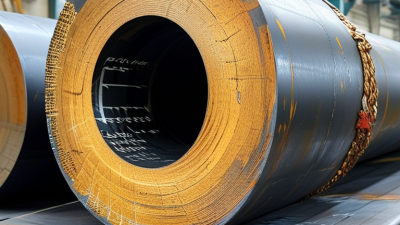
Tube mill capacity starts with the product envelope, not the headline speed. Specify the minimum and maximum tube diameter, plus wall thickness, before comparing machines. A mill set up for 20 mm tube may not switch efficiently to 100 mm tube; roll changes, forming stands, and weld power all matter. Wall thickness affects forming load and weld heat. Small detail. Big effect. For a quick estimate, a 50.8 mm tube with a 2 mm wall weighs about 2.4 kg per metre, assuming steel density of 7,850 kg/m³. At 40 metres per minute, theoretical output is roughly 5.8 tonnes per hour.
That is not saleable output. The estimate excludes scrap, start-up losses, tool changes, and unplanned stops. A 2024 World Steel Association report, World Steel in Figures, records 1,892.2 million tonnes of global crude steel production in 2023; it provides market context, not a tube-mill performance benchmark. Ask suppliers for tested speed at the exact diameter and wall thickness, and clarify whether speed means forming speed or sustained production speed. Then compare output over a full shift, with cut length, changeover time, and reject rate stated. Real floors are messier. A short trial run can still hide losses.
A tube mill making machine must be matched to the product standard, not just the target diameter. ASTM A500 covers cold-formed welded and seamless carbon steel structural tubing, often used in columns and frames. EN 10219 applies to cold-formed welded structural hollow sections. Both require control of dimensions, material properties, and manufacturing quality, but their test methods and acceptance criteria differ. Small details matter.
API 5L covers steel line pipe for pipeline transportation systems. PSL 1 sets baseline requirements, while PSL 2 adds tighter controls for areas such as chemical composition, mechanical properties, testing, and traceability. Exact obligations depend on the specified grade and product form. A mill’s forming stands, welding system, sizing section, and inspection equipment should support the applicable requirements. The machine alone does not make pipe compliant.
For buyers comparing manufacturers worldwide, ask how each line verifies wall thickness, outside diameter, weld integrity, and process records. Check whether the proposed setup can handle the required steel grades and production range without unstable forming or excessive scrap. A neat sample is encouraging, but it is not enough. Request documented test results and clarify who performs product certification. In practice, specifications can be read differently; confirm the edition and order requirements before production begins.
Tube mill manufacturers serve distinct regional markets, shaped by local steel grades, production volumes, and delivery expectations. In established industrial regions, buyers may prioritize high-speed lines, automated controls, and consistent weld quality. Growing markets often seek flexible equipment that can handle several tube diameters without lengthy changeovers. A compact mill can suit a smaller factory, while large producers may need integrated cutting, stacking, and inspection systems. These differences matter. Product lines vary in forming range, wall thickness capacity, tooling options, and automation level. Published specifications help, but they do not replace a trial run using the buyer’s actual material.
Tips: Ask for sample production data and a clear tooling list. Check which spare parts are stocked nearby. A fast reply is not the same as reliable service.
Service networks can include installation teams, operator training, remote diagnostics, and scheduled maintenance. Their reach differs by region, so response times should be confirmed in writing. Buyers should also ask how technicians handle controls or components sourced from different suppliers. That detail is easy to miss. A machine may look suitable on paper yet require costly adjustments after installation. Comparing warranty terms, commissioning plans, and local support capacity gives a more grounded view than comparing purchase prices alone. Some requirements remain uncertain until production begins, so realistic acceptance criteria matter.
| Regional market | Commonly available product lines | Typical applications | Service network patterns | Market characteristics |
|---|---|---|---|---|
| China | ERW tube and pipe mills, stainless-steel tube lines, roll-forming equipment, slitting lines, and tube-finishing systems. | Construction, furniture, general engineering, automotive supply chains, and energy-related pipe production. | Domestic installation and commissioning support is commonly offered. Export support may be provided through in-house teams, agents, or remote technical service; coverage varies by supplier and destination. | A broad supplier base offers equipment across a wide range of configurations and production scales. Specifications and service coverage should be checked supplier by supplier. |
| India | ERW tube mills, slitting and cut-to-length lines, roll-forming equipment, and tube straightening or finishing machinery. | Structural sections, water and general-purpose pipes, industrial tubing, and fabricated products. | Local installation, operator training, spare-parts supply, and maintenance support may be available through manufacturers or regional service partners. | The market includes domestic equipment makers and imported systems. Automation level, production range, and after-sales arrangements vary substantially. |
| Europe | ERW and precision tube mills, stainless-steel tube lines, high-frequency welding systems, roll tooling, automation, and line-modernization solutions. | Automotive components, precision engineering, industrial equipment, construction, and specialty tubing. | Depending on the supplier, support can include direct field-service teams, commissioning, remote diagnostics, training, and regional technical partners. | Suppliers commonly serve both new-line projects and upgrades. Buyers typically assess process capability, automation integration, and lifecycle support alongside machine specifications. |
| North America | ERW tube mills, roll tooling, material-handling systems, automation, inspection equipment, and retrofit or upgrade packages. | Construction products, automotive and transport components, industrial tubing, and energy-sector applications. | Service may be delivered by local manufacturers, North American offices of overseas suppliers, or independent integrators. On-site response and spare-parts availability differ by provider. | Both new installations and modernization of existing production lines are part of the market. Compatibility with installed equipment is an important project consideration. |
| Japan and South Korea | Automated tube-mill systems, precision welding and sizing equipment, inspection systems, and production-line controls. | Automotive, machinery, precision components, and industrial or specialty tubing. | Technical support is generally arranged through the equipment supplier and its local or overseas service organization; export projects may also use regional partners. | Project evaluation often emphasizes process consistency, automation, and quality control. Capabilities and international service reach are supplier-specific. |
| Taiwan | ERW tube mills, tube-processing equipment, roll tooling, and compact or modular production-line configurations. | General industrial tubing, furniture and construction products, and components for machinery and transport. | Export-oriented suppliers may support customers through overseas agents, distributors, remote assistance, and project-based commissioning. | Export availability is an important feature of the market. Buyers should confirm local service coverage, commissioning scope, and spare-parts lead times before purchase. |
| Note: This is a qualitative, non-ranked overview of regional market patterns and commonly offered equipment. Product availability, technical capability, and service networks vary by manufacturer, project, and destination; verify details directly with prospective suppliers. | ||||
Compare tube mill suppliers by verified production range, not headline speed. Ask for a witnessed run using your steel grade, wall thickness, diameter range, and target changeover time. Record saleable tubes per shift, scrap rate, and downtime—not just line speed. Numbers need context. A mill rated at 80 metres per minute may produce less when roll changes or weld adjustments interrupt the line.
Automation should solve a named bottleneck. Check whether coil handling, sizing, weld monitoring, and fault alerts work together, and ask to see them running. The International Federation of Robotics’ World Robotics 2024 report recorded 4,281,585 industrial robots operating worldwide in 2023, a 10% annual increase. That shows wider adoption, not that every mill needs robotics. Ask for proof. Confirm operator training and what happens when a sensor fails.
For compliance, request risk assessments, electrical documentation, guarding details, and traceability options matched to the destination market’s applicable standards. Then compare lifecycle cost: tooling, energy, consumables, maintenance, training, and spare-part lead times. The International Energy Agency’s 2023 industry tracking reports that industry uses about 37% of global energy, making energy efficiency worth checking alongside purchase price. One uncomfortable point: suppliers may quote ideal output, while buyers pay for real stoppages. Request reference performance data and define acceptance tests before ordering.