Leave Your Message
- Phone
- E-mail
- Whatsapp
- WeChat

Choosing the right Ms Tube Mill Pipe Making Machinery requires more than comparing catalog prices. A reliable supplier must demonstrate forming accuracy, weld stability, line speed, safety design, and after-sales support. These details become visible on the factory floor: steady strip feeding, clean weld beads, controlled sizing, and fewer unplanned stops.
The market deserves careful attention. The World Steel Association reported approximately 1.89 billion tonnes of crude steel production in 2023. That volume supports continuing demand for welded tubes used in construction, furniture, energy, automotive, and infrastructure projects. Industry reports from Grand View Research and MarketsandMarkets also identify automation, high-frequency welding, and energy efficiency as important development directions. However, projected growth figures differ between reports. Buyers should examine the methodology, not accept every forecast blindly.
Edwin Basson, Director General of the World Steel Association, has stated, “Steel is essential for a sustainable future.” His point also applies to tube-mill investment. Durable machinery can reduce scrap, stabilize production, and extend equipment life. Yet no supplier is perfect. Even respected manufacturers may struggle with commissioning delays, software integration, or local service coverage. That weakness matters.
This guide examines leading suppliers of Ms Tube Mill Pipe Making Machinery through practical criteria. It considers machine configuration, production flexibility, welding technology, quality control, spare-parts access, operator training, and documented customer experience. A lower quotation may hide installation costs or limited technical support. The strongest choice is usually the supplier that proves performance under comparable operating conditions.
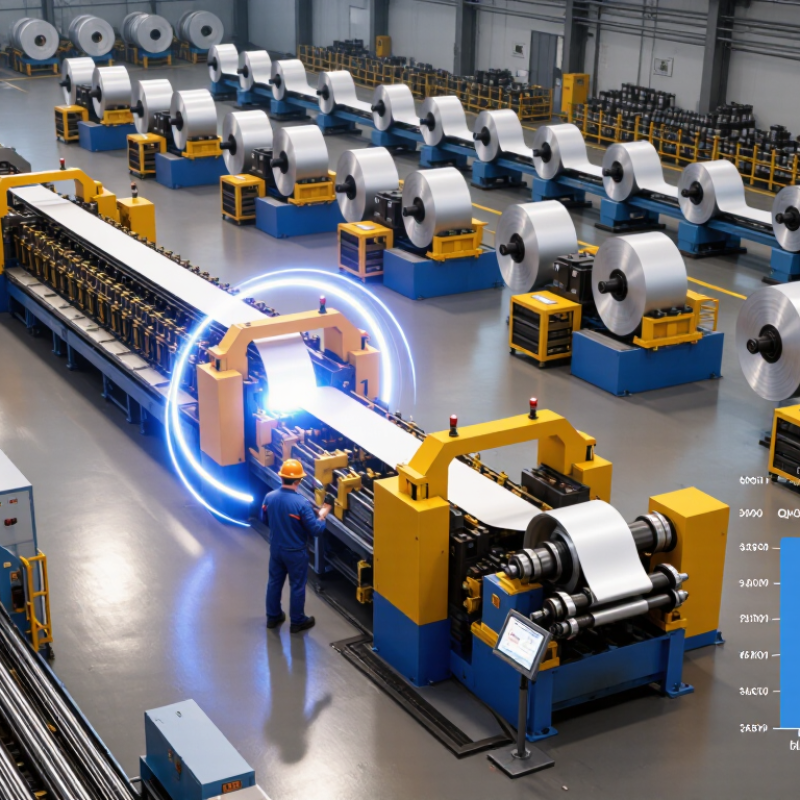
Top MS Tube Mill Pipe Making Machinery Suppliers?
MS tube mill pipe making machinery is an industrial production line for manufacturing mild steel pipes and tubes. MS means mild steel, a low-carbon material valued for strength, weldability, and affordable processing. The machinery forms steel strips into round, square, or rectangular sections.
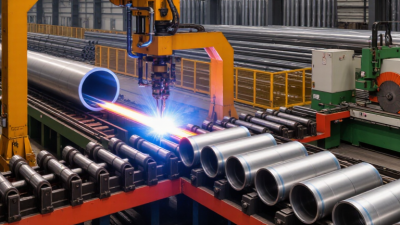
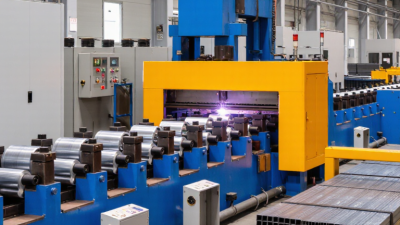
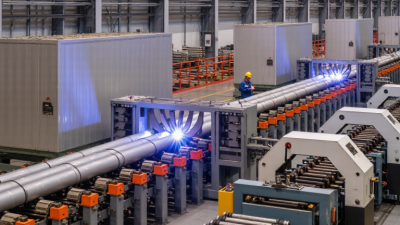
A typical line includes a decoiler, strip straightener, forming stands, welding unit, sizing section, cutting machine, and run-out table. The decoiler releases the steel coil steadily. Forming rollers gradually bend the strip. The welding unit joins the open seam, often using high-frequency technology. Sizing rollers then correct the final shape and dimensions. Cutting equipment produces fixed pipe lengths.
Good machinery depends on more than speed. Operators should check frame rigidity, roller alignment, weld stability, control accuracy, and spare-part availability. In practical production, poor alignment can create uneven seams or surface marks. I have found that small calibration errors become expensive after long production runs. This is where many purchasing plans need more honest review.
Tips: Confirm the required pipe range before selecting a mill. Match motor power with thickness and material grade. Request test production with your actual steel coil. Inspect sample pipes for straightness, weld appearance, diameter tolerance, and burr control. Ask for clear maintenance guidance and operator training. A fast machine is not always the most reliable choice.
| Evaluation Dimension | Typical Industry Specification | What It Means | Supplier Selection Checkpoint |
|---|---|---|---|
| Machine Definition | Continuous forming and welding line for mild-steel strip or coil | The line converts flat steel strip into round, square, rectangular, or shaped hollow sections. | Confirm that the proposed line is designed for MS, carbon-steel, and the required tube profile. |
| Raw Material | Hot-rolled or cold-rolled carbon-steel strip; commonly supplied in coils | Material width and thickness determine the achievable tube size, welding load, and production speed. | Check coil outer diameter, inner diameter, maximum coil weight, yield strength, and material grade compatibility. |
| Tube Outside Diameter | Approximately 20–165 mm for common small and medium ERW tube lines | The diameter range identifies the main production class of the mill. | Select a size range that covers current products without excessively oversizing the line. |
| Wall Thickness | Approximately 0.8–6.0 mm, depending on tube diameter and mill configuration | Thicker material generally requires greater forming force, welding power, and cooling capacity. | Request a thickness chart showing the minimum and maximum range at each tube size. |
| Forming Method | Roll forming through breakdown, fin-pass, sizing, and straightening stands | Progressive rolls gradually shape the strip before and after the weld zone. | Review roll-pass design, stand adjustment, quick-change tooling, and setup repeatability. |
| Welding Technology | High-frequency electric resistance welding, usually using solid-state or vacuum-tube equipment | The longitudinal edges are heated and pressed together without adding filler metal. | Evaluate weld power, frequency range, impedance design, weld monitoring, and edge preparation. |
| Line Speed | Approximately 20–120 m/min for many MS ERW applications | Actual output depends on tube size, wall thickness, steel grade, welding conditions, and cutting length. | Compare guaranteed speed at the required product size rather than the maximum empty-line speed. |
| Cutting System | Flying cold saw or rotary cutting system for synchronized in-line cutting | The cutter produces fixed-length tubes while the strip continues moving through the line. | Check cutting tolerance, burr level, blade life, scrap handling, and the supported length range. |
| Typical Finished Length | Commonly 4–12 m; other lengths may be configured | Finished length is controlled by the encoder, PLC, and cutting synchronization system. | Verify length tolerance and whether the line supports automatic length changes. |
| Main Line Sections | Uncoiler, strip straightener, shear and end welder, accumulator, forming mill, HF welder, sizing mill, cutter, and run-out table | Each section performs a specific function in the continuous tube-making process. | Request a complete equipment list, line layout, utility schedule, and spare-parts list. |
| Automation and Controls | PLC-based control with operator panel, drive synchronization, alarms, and recipe management | Automation coordinates forming speed, welding parameters, cutting, safety, and production data. | Check data logging, remote diagnostics, language options, access control, and electrical documentation. |
| Quality Inspection | Dimensional inspection, visual weld inspection, eddy-current or ultrasonic testing where required | Inspection confirms tube dimensions, weld integrity, surface condition, and straightness. | Confirm available non-destructive testing, calibration records, and inspection reporting. |
| Applicable Standards | Product requirements may reference ASTM, EN, API, JIS, or equivalent national standards | The applicable standard defines dimensions, tolerances, mechanical properties, testing, and acceptance criteria. | Specify the exact product standard before finalizing tooling, welding, and testing requirements. |
| Power and Utilities | Three-phase industrial electrical supply, compressed air, cooling water, and hydraulic or lubrication systems | Stable utilities are essential for consistent forming, welding, cooling, and cutting performance. | Obtain connected load, operating load, water flow, air pressure, and installation requirements. |
| Supplier Capability | Engineering, roll tooling, installation, commissioning, operator training, warranty, and after-sales service | A reliable supplier provides the complete technical solution rather than only individual machines. | Assess proven production references, performance guarantees, service response time, documentation, and spare-parts availability. |