Leave Your Message
- Phone
- E-mail
- Whatsapp
- WeChat

Choosing among China’s top Pipe Making Machinery Tube Mill suppliers requires more than comparing prices and catalog photos. A reliable supplier should demonstrate factory experience, stable production records, and clear technical documentation. Buyers should examine forming methods, welding systems, sizing accuracy, line speed, and compatible steel grades. These details directly affect output quality and long-term operating costs.
Real evidence matters. Ask for machine videos, inspection reports, sample pipes, and references from similar projects. A serious manufacturer can explain how its mill handles coil width, wall thickness, tube diameter, and changeover time. It should also describe electrical components, control systems, safety protection, and spare-parts availability without hiding behind vague claims. Factory visits can reveal practical details, such as workshop organization, welding quality, calibration tools, and testing procedures.
Small details matter.
However, no supplier is perfect for every application. Some companies offer advanced automation but limited overseas service. Others provide flexible customization but need stronger project management. This article will compare important supplier qualities, manufacturing capabilities, customization options, quality control, installation support, and after-sales response. It will also consider certification claims carefully, because documents alone cannot prove consistent performance. A balanced evaluation should connect technical specifications with actual production needs, budget limits, operator skills, and future expansion plans. In my experience, the best choice is not always the cheapest or most famous supplier. It is the manufacturer that communicates clearly, tests honestly, and supports the mill after delivery. Mistakes still happen, and responsible suppliers explain how they correct them.

China Top Pipe Making Machinery Tube Mill Suppliers?
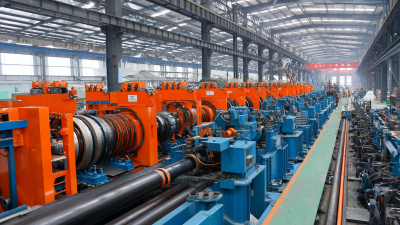
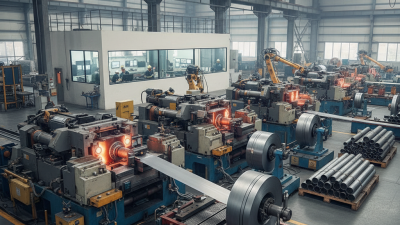
Pipe making machinery converts steel strip into round, square, or rectangular tubes. A tube mill usually starts with a decoiler and strip straightener. Forming rolls gradually bend the strip into an open circular shape. A high-frequency welder then joins the edges. After welding, sizing rolls correct the diameter, while a flying saw cuts fixed lengths. Online inspection can check weld appearance, dimensions, and surface defects.
The scale is significant. World Steel Association’s World Steel in Figures 2024 reports 1,888.2 million tonnes of crude steel production in 2023. This large material base supports continuing demand for efficient tube production. The OECD Steel Outlook 2024 also expects global steelmaking capacity to approach 2.5 billion tonnes by 2026. More capacity does not automatically mean better machinery. Energy use, changeover time, weld stability, and scrap rates still decide operating value.
In practical operation, strip alignment matters first. A small entry error can create edge waves or unstable welding. I have seen attractive output figures hide frequent adjustments. That is why buyers should examine mill speed, usable thickness range, tooling design, and inspection records together. A high-speed line may perform poorly with thin, coated, or high-strength steel. The correct tube mill is not always the fastest one. It is the one that holds tolerance during real production, not only during a short demonstration.
A practical comparison of common pipe-making machinery configurations, typical operating ranges, production stages, and supplier evaluation criteria. Actual specifications depend on material grade, pipe dimensions, forming method, standards, and plant layout.
| Machinery Type | Primary Manufacturing Method | Typical Material | Typical Outside Diameter Range | Typical Wall Thickness | Typical Line Speed | Core Tube Mill Process | Common Applications | Important Selection Factors |
|---|---|---|---|---|---|---|---|---|
| High-Frequency ERW Tube Mill | Continuous longitudinal forming followed by high-frequency electric resistance welding | Carbon steel, galvanized steel, low-alloy steel | Approx. 12–610 mm | Approx. 0.6–16 mm | Approx. 20–120 m/min | Uncoiling, leveling, strip joining, forming, HF welding, external bead removal, sizing, cutting, and discharge | Structural tubes, furniture tubes, mechanical tubes, water lines, and general industrial pipe | Steel grade, coil width, welding power, dimensional tolerance, bead treatment, and required production speed |
| Stainless Steel TIG Tube Mill | Continuous forming with tungsten inert gas welding and controlled shielding gas | Stainless steel and corrosion-resistant alloys | Approx. 6–219 mm | Approx. 0.3–6 mm | Approx. 3–30 m/min | Strip preparation, roll forming, TIG welding, weld cooling, sizing, cutting, and optional polishing | Food-processing equipment, architectural tubing, heat exchangers, and sanitary pipe | Surface finish, shielding-gas control, weld penetration, internal bead condition, and cleaning requirements |
| Laser-Welded Tube Mill | Continuous forming followed by focused laser welding with a narrow heat-affected zone | Carbon steel, stainless steel, galvanized steel, and selected high-strength steels | Approx. 10–220 mm | Approx. 0.4–4 mm | Approx. 20–100 m/min | Strip preparation, precision forming, laser welding, cooling, sizing, inspection, and cutting | Automotive components, precision mechanical tubes, lightweight structures, and high-strength profiles | Laser power, joint alignment, optical protection, material reflectivity, dimensional accuracy, and operator safety |
| Spiral Submerged Arc Welded Pipe Line | Helically forming steel strip and welding the seam by submerged arc welding | Carbon steel and low-alloy steel plate or strip | Approx. 219–3,600 mm | Approx. 5–25 mm | Approx. 0.5–3 m/min | Uncoiling, leveling, edge milling, spiral forming, internal and external SAW, ultrasonic testing, cutting, and end finishing | Water transmission, piling, low-pressure pipeline, and large-diameter structural applications | Plate quality, weld procedure, pipe diameter control, nondestructive testing, end beveling, and applicable pipeline standard |
| Cold Roll-Formed Profile Mill | Progressive roll forming of strip into square, rectangular, oval, or customized hollow sections | Carbon steel, galvanized steel, stainless steel, and pre-painted steel | Approx. 10–500 mm | Approx. 0.5–12 mm | Approx. 15–100 m/min | Coil handling, leveling, roll forming, optional welding, sizing, straightening, cutting, and stacking | Construction frames, solar-support structures, racking, automotive sections, and engineered profiles | Profile geometry, roll-pass design, material yield strength, corner radius, weld seam location, and changeover time |
| Seamless Pipe Production Line | Hot piercing and elongation of a solid billet without a longitudinal welded seam | Carbon steel, alloy steel, stainless steel, and selected specialty alloys | Approx. 20–660 mm | Approx. 2–60 mm | Process-dependent | Billet heating, rotary piercing, elongation, sizing or reducing, heat treatment, straightening, inspection, and finishing | Boiler tubes, pressure applications, oil and gas service, mechanical tubing, and high-temperature systems | Billet chemistry, heating accuracy, wall-thickness control, heat treatment, testing requirements, and production scale |
Typical ranges are provided for technical comparison only. A complete quotation should confirm the compatible raw-material dimensions, finished-tube tolerances, welding method, line layout, electrical standards, testing equipment, tooling scope, and commissioning requirements.