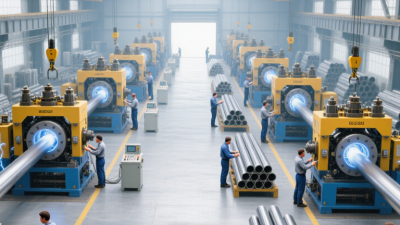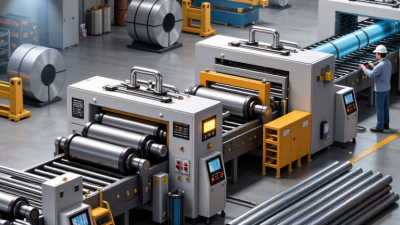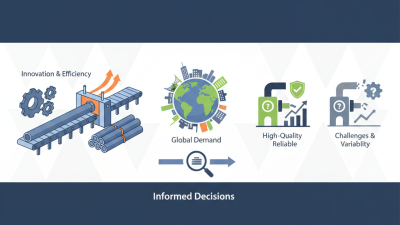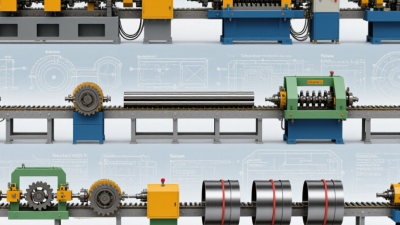
China’s steel pipe machinery sector has matured from cost-focused production into a serious engineering market. Many Chinese manufacturers now supply complete High Quality Steel Pipe Machines Tube Mill lines for construction, energy, automotive, and precision tube applications. Their capabilities vary widely, however. A polished brochure cannot replace stable forming, accurate sizing, and dependable welding performance.
This introduction examines ten leading Chinese manufacturers through practical criteria. These include mill design, strip-width flexibility, tube diameter range, production speed, automation, and quality control. It also considers installation support, spare-parts availability, export experience, and customer references. On a real factory floor, small details matter. A misaligned roll can create visible weld stress. A weak cooling system can interrupt an otherwise efficient line. A delayed service response can cost more than the original price difference.
Quality-management authority W. Edwards Deming stated, “Quality comes not from inspection, but from the improvement of the production process.” His principle remains relevant to tube mills. Reliable manufacturers build quality into engineering, machining, assembly, testing, and commissioning. Still, no ranking is perfect. Buyer requirements differ, and advertised capacity may not match long-term performance. That deserves careful reflection.
The manufacturers discussed here represent strong candidates, not automatic choices. Buyers should compare technical drawings, trial results, certifications, delivery records, and after-sales commitments. Factory visits can reveal more than sales presentations. A trustworthy supplier should explain limitations clearly. It should also document tolerances, electrical standards, safety systems, and operator training. This practical approach can help companies choose a High Quality Steel Pipe Machines Tube Mill with fewer surprises and more dependable production.
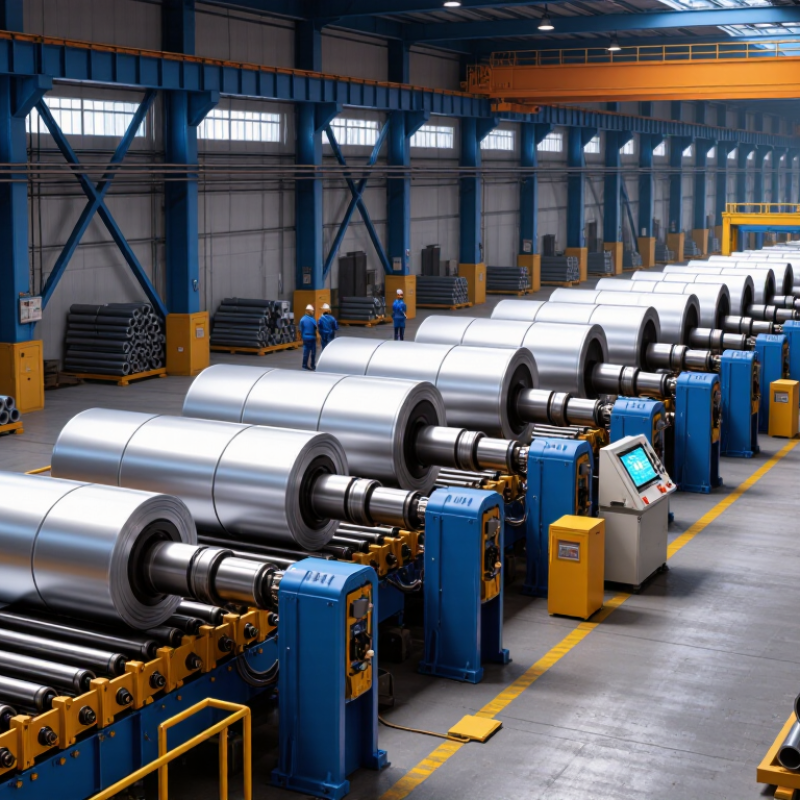
China’s steel pipe machine manufacturing industry has moved from basic fabrication toward integrated, digitally monitored production lines. In factory evaluations, buyers usually inspect forming accuracy, welding stability, and service response before discussing price. Leading manufacturers typically supply equipment for ERW, spiral welded, and precision tube production. Some also build tooling, flying saws, hydrostatic testers, and automated packing systems.
The details matter. A poorly aligned roll can leave visible marks or create uneven wall stress. Modern lines use sensors to track temperature, speed, weld current, and dimensional changes during operation. These records help engineers adjust production before defects become expensive batches. However, automation does not remove the need for skilled operators. Practical experience still matters during setup, troubleshooting, and material changes.
Chinese manufacturers benefit from a dense steel-processing supply chain and broad export experience. This supports competitive lead times, customized layouts, and replacement parts for different pipe sizes. Reliable suppliers should provide material certificates, trial-run data, installation procedures, and clear maintenance schedules. They should also explain limits honestly. A machine rated for high output may perform poorly when raw material quality fluctuates. That uncomfortable point deserves attention. Energy use, noise control, safety guarding, and software compatibility are becoming stronger purchasing criteria. Yet quality can vary between workshops, even when brochures appear similar. Independent inspections, sample production, and contract-based acceptance tests reduce this uncertainty.
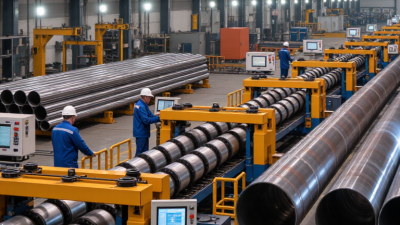
China’s crude steel production remained above 1 billion tonnes annually from 2020 to 2024. This sustained industrial scale provides a broad demand base for steel pipe production lines, tube mills, sizing equipment, welding systems, cutting machines, and related automation technologies. The figures are industry-level context and do not represent individual manufacturers or brands.
Source: World Steel Association, World Steel in Figures 2025. Values are shown in million tonnes.
Selecting a high-quality steel pipe machine manufacturer requires more than checking production speed. The World Steel Association reported about 1.89 billion tonnes of crude steel production in 2023. This scale increases pressure on stable forming, welding, and cutting performance.
Ask for measured results from comparable pipe sizes. Check diameter tolerance, wall-thickness control, weld consistency, scrap rate, and changeover time. A factory acceptance test should use your actual steel grade and coil dimensions. Request calibration records, inspection reports, and traceable component lists. ISO 9001 certification supports process control, but it does not prove machine performance. Test evidence matters more.
Energy use deserves attention. The International Energy Agency estimates that iron and steel production creates around 7–9% of global energy-related carbon emissions. Efficient drives, controlled heating, and reduced idle time can lower operating costs. Ask for kWh per tonne under defined conditions. Vague promises are weak evidence. Look closely. A manufacturer should explain software updates, spare-parts availability, operator training, and response times. Technical support often decides whether a mill recovers quickly after a fault. No scorecard is perfect. My own selection would reserve points for maintainability, because impressive first-day output can hide difficult cleaning, frequent alignment work, or expensive downtime.
China’s top ten steel pipe machine manufacturers serve different production needs. Their strengths range from welded tube lines to high-frequency systems and precision finishing equipment. This profile compares practical capabilities, not advertising claims.
One manufacturer focuses on compact mills for small and medium factories. Another builds high-frequency welding lines with automatic edge control. A third develops heavy-duty equipment for thick-wall pipes. One supplier is known for hydraulic sizing systems and stable diameter control. Another combines tube forming with online ultrasonic inspection.
A sixth offers customized cutting, threading, and end-facing units. A seventh emphasizes energy-saving drives and reduced setup time. An eighth supports stainless steel processing with careful surface protection. A ninth provides large-diameter spiral pipe machinery for infrastructure projects. The tenth integrates production data with maintenance alerts.
Details matter. A reliable machine should hold alignment during long production runs. Weld temperature, strip tension, and roll wear need regular checking. Experienced engineers usually test samples before final acceptance. They also examine noise, vibration, spare-part access, and operator safety.
Performance is not always perfect. Some advanced lines require costly training and slower commissioning. Smaller workshops may prefer simpler controls. Buyers should compare output, material range, service response, and documented test results.
Factory visits can reveal more than polished brochures. One overlooked issue remains cleaning around forming rolls. It affects quality gradually. Teams should record defects, review causes, and adjust the process instead of blaming the machine.
Steel pipe production starts with the machine type, not the catalog image. ERW lines suit high-volume structural and fluid pipes. They use strip uncoiling, forming, high-frequency welding, sizing, and cutting. Spiral welded lines handle larger diameters with flexible width control. Seamless pipe lines require piercing, elongation, heat treatment, and accurate sizing. The choice depends on diameter, wall thickness, steel grade, and order variation.
Scale matters. The World Steel Association reported about 1.89 billion tonnes of global crude steel production in 2023. That volume increases pressure on manufacturers to reduce scrap and stabilize output. High-frequency welding systems now use closed-loop controls for temperature and line speed. Laser or ultrasonic inspection can detect weld flaws without damaging the pipe. However, inspection hardware cannot repair poor forming.
Energy performance deserves equal attention. The International Energy Agency identifies steelmaking as a major industrial energy consumer, making efficient heating and motor control commercially important. Servo drives, regenerative systems, and optimized induction heating can reduce unnecessary consumption. Automation also connects production data with maintenance schedules. Useful, but not perfect. Poor sensors still create misleading dashboards.
For pipeline applications, buyers should check alignment with ISO 3183 or API Specification 5L, where applicable. They should also verify dimensional tolerance, weld testing, coating compatibility, and traceability. A reliable machine builder provides trial production data, not only impressive speed figures. The fastest line may perform badly on thin strip or frequent size changes. That detail is often overlooked.
China Top 10 High Quality Steel Pipe Machine Manufacturers
How to Evaluate and Choose a Reliable Chinese Manufacturer
Choosing a reliable Chinese steel pipe machine manufacturer requires more than comparing prices. Check its experience with your required pipe diameter, wall thickness, steel grade, and production speed. A serious supplier should explain forming methods, welding control, roll design, and line maintenance clearly. Ask for factory videos, verified installation records, and recent customer references. A polished brochure is not proof.
Tips: Request a detailed technical proposal before discussing the final price. Compare motor brands, spare-part availability, testing equipment, and warranty terms. Visit the workshop when possible. Inspect welding stations, electrical cabinets, machining accuracy, and finished pipe samples. Ask how the supplier handles alignment problems, surface defects, and delayed components. Clear answers matter.
Use measurable acceptance standards. These may include output speed, diameter tolerance, weld strength, energy use, and trial-run results. Ask whether the manufacturer can provide inspection reports and commissioning support. Confirm that manuals, drawings, and training are included. Independent inspection can reduce costly misunderstandings. It may feel excessive, but machines behave differently after installation.
Do not select a supplier only because it appears among the top ten. Production records, engineering depth, communication quality, and after-sales response deserve equal attention. I would also test response times during early negotiations. Slow replies may become serious delays later. No supplier is perfect. Careful verification still improves the odds of a stable, maintainable production line.
| No. | Evaluation Dimension | Recommended Benchmark | Evidence to Request | Warning Signs | Suggested Weight |
|---|---|---|---|---|---|
| 1 | Applicable Product Standards | The manufacturer should clearly match the machine and finished pipe requirements with applicable standards such as API 5L for line pipe, ASTM A53 for general-purpose steel pipe, ASTM A106 for seamless carbon steel pipe used at high temperatures, EN 10217 for welded pressure tubes, or relevant GB/T standards. | A standard-to-process matrix showing the required pipe grade, diameter range, wall thickness, welding method, heat treatment, testing, and inspection requirements. | The supplier lists standards without explaining which machine configuration and production step satisfy them. | 15% |
| 2 | Production Range | The machine should cover the buyer’s required outside diameter, wall-thickness range, steel grade, pipe length, production speed, and changeover requirements with sufficient operating margin. | A technical specification sheet, production-range chart, line layout, tooling list, and sample calculations for the buyer’s target pipe sizes. | The quoted maximum speed or diameter is provided without details about material grade, wall thickness, yield rate, or operating conditions. | 15% |
| 3 | Forming and Welding Accuracy | Roll forming, sizing, welding alignment, cutting, and end-facing systems should be designed to achieve the dimensional tolerances specified by the selected product standard. | Sample inspection reports showing outside diameter, wall thickness, straightness, ovality, weld alignment, cut length, and end condition. | Only speed is emphasized, while dimensional capability and repeatability are not demonstrated with inspection data. | 12% |
| 4 | Quality Control and Testing | The line should support appropriate testing, such as hydrostatic testing, eddy-current testing, ultrasonic testing, weld inspection, dimensional inspection, and visual examination, according to the product specification. | Inspection and test plan, equipment list, calibration certificates, sample mill test reports, non-destructive testing records, and traceability procedure. | Testing equipment is described as optional when it is required by the target pipe standard or end user. | 15% |
| 5 | Automation and Process Control | Automatic gauge control, centralized PLC/HMI control, alarm management, recipe storage, production data recording, and controlled acceleration or deceleration can improve consistency and reduce operator-dependent variation. | Control-system architecture, automation list, sample HMI screens, data-recording functions, spare-parts list, and cybersecurity or access-control arrangements. | The supplier offers “fully automatic” operation without defining which steps are automated or how process data are recorded. | 8% |
| 6 | Materials and Component Quality | Critical components should have identifiable specifications, suitable load ratings, documented suppliers, and accessible replacement options. Welding power sources, bearings, motors, reducers, sensors, and electrical components should be selected for the intended duty cycle. | Bill of materials, component datasheets, certificates for pressure-bearing or structural parts, spare-parts recommendations, and incoming inspection records. | Critical components are unnamed, substituted without approval, or unavailable through normal service channels. | 8% |
| 7 | Factory Capability and Experience | A reliable supplier should have an identifiable workshop, engineering personnel, assembly capability, testing facilities, documented procedures, and relevant completed projects that can be independently verified. | Live video or physical factory audit, organization chart, equipment list, project references, production photographs with dates, and customer reference contacts subject to permission. | The sales office cannot arrange a technical meeting, factory audit, or contact with a qualified engineering representative. | 10% |
| 8 | Factory Acceptance Testing | The purchase contract should define a factory acceptance test using the buyer’s approved materials, target sizes, inspection points, acceptance criteria, punch-list process, and documentation requirements. | A signed FAT protocol, test schedule, acceptance criteria, performance guarantee, sample inspection forms, and procedure for correcting failed results. | The supplier refuses performance testing or limits testing to an empty-machine demonstration. | 8% |
| 9 | Installation, Training, and After-Sales Service | The scope should include installation supervision, operator and maintenance training, manuals in an agreed language, remote support, troubleshooting response time, and availability of critical spare parts. | Service-level agreement, training plan, electrical and mechanical drawings, maintenance schedule, troubleshooting guide, warranty terms, and spare-parts lead times. | Warranty exclusions are broad, response times are undefined, or technical documents are delivered only after commissioning. | 5% |
| 10 | Commercial Transparency and Risk Control | The quotation should clearly separate machine scope, auxiliary equipment, installation, commissioning, packaging, shipping, taxes, payment milestones, delivery schedule, exclusions, and performance guarantees. | Itemized quotation, contract draft, milestone-payment schedule, delivery plan, packing specification, insurance responsibility, and documented change-control procedure. | A low initial price is offset by unclear exclusions, large undocumented advance payments, or frequent changes to technical scope. | 4% |
| Total Suggested Evaluation Weight | 100% | ||||