Leave Your Message

How to Choose the Best High Frequency Pipe Making Machine

Choosing the right High Frequency Pipe Making Machine can shape your production quality, energy use, and long-term operating costs. A suitable machine should match pipe diameter, wall thickness, steel grade, required speed, and expected order volume. These details matter on the factory floor. A machine running at maximum speed may still waste material if its forming section lacks stability.

Experienced buyers inspect more than advertised output. They review welding power, impedance control, roll design, cutting accuracy, cooling performance, and electrical protection. Ask for measured samples, not attractive promises. Examine a finished pipe under proper lighting. Check its seam appearance, roundness, end condition, and dimensional consistency. Request production records from comparable installations. Reliable suppliers should explain maintenance intervals, spare-part availability, operator training, and commissioning support. Their answers should remain clear when technical questions become specific.

A practical evaluation also includes the whole production line. Decoilers, forming stands, the high-frequency welder, sizing equipment, and flying saw must work together. Small timing errors can create visible marks or unstable welds. Safety guarding and documented operating procedures deserve equal attention. They protect people and support dependable production. Energy consumption should be measured under realistic loads, not only during ideal demonstrations.

There is no universal best machine. Not really. A lower-cost model may suit limited production, while a robust system may repay its price through fewer stoppages. However, projected savings can be wrong when installation conditions are ignored. Compare verified performance, service capability, and lifecycle cost before signing. A careful choice begins with honest data, practical trials, and a willingness to question impressive claims.
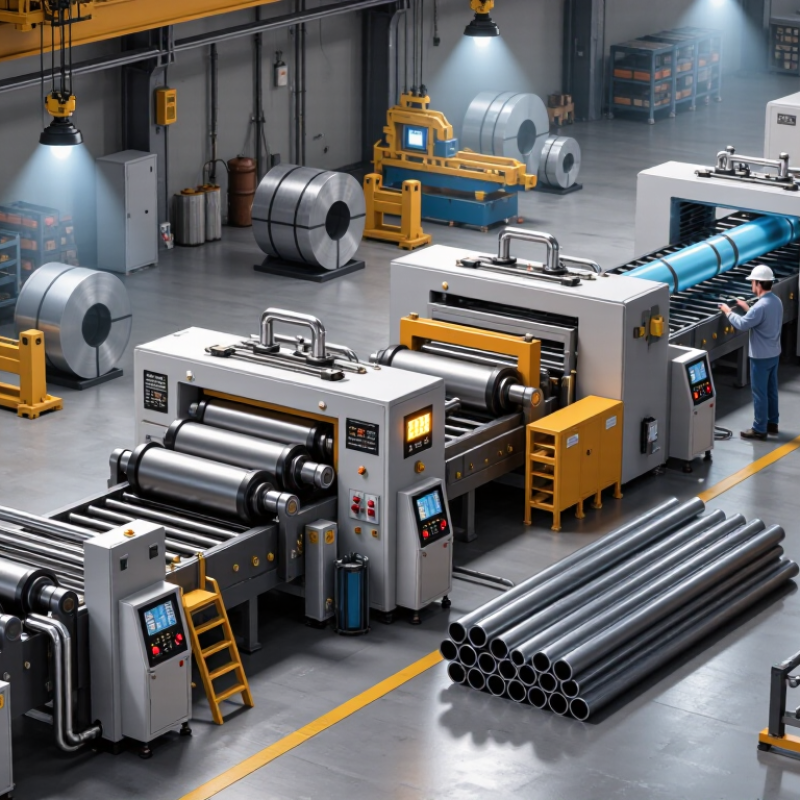
How to Choose the Best High Frequency Pipe Making Machine

Define Your High Frequency Pipe Production Requirements

Choosing a high frequency pipe making machine starts with defining the product, not browsing machine catalogs. Record the target diameter range, wall thickness, steel grade, strip width, and monthly output. World Steel Association’s World Steel in Figures 2024 reports 1.892 billion tonnes of crude steel production in 2023. That scale hides major differences between commodity tube and precision pipe. Your line must match the actual material mix. A wide range can reduce changeover efficiency.

State the required speed in finished meters per minute, then test it against realistic uptime. Include forming, welding, sizing, cutting, inspection, and planned maintenance. A machine rated at 120 meters per minute may deliver less in production. Coil changes and weld adjustments consume time. Define acceptable weld strength, bead removal, dimensional tolerance, and surface condition. If your applications follow recognized requirements, map them to standards such as ASTM A53 or ISO 3183. Do this before discussing machine power. Do not assume thicker walls only need more frequency. Impedance, edge preparation, and cooling also matter. I have seen specifications built around peak speed. That is an easy mistake.

Tips: Prepare normal, maximum, and difficult production scenarios. Request output evidence using your steel grade and thickness. Ask for energy use per tonne, contact-life assumptions, and changeover time. The IEA’s Energy Efficiency 2023 analysis places industry at roughly 37% of global final energy use. Therefore, measure electricity carefully. Compare kilowatt-hours per tonne, not only motor size. Leave room for uncertainty. Your first estimate may be wrong.
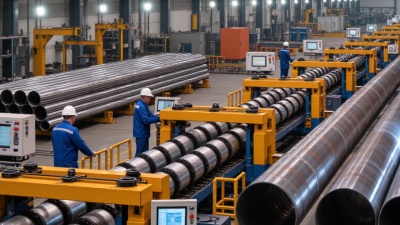
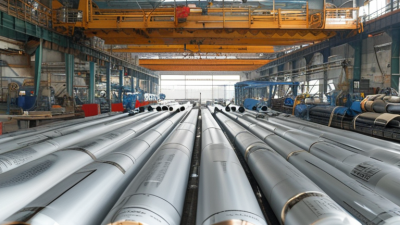
Evaluate Machine Specifications and Forming Capabilities

Choosing the best high frequency pipe making machine starts with measurable specifications, not impressive speed claims. Check the usable diameter range, wall thickness, steel grades, production speed, and installed power. A machine rated for 80 meters per minute may slow considerably with thicker material or tighter tolerances. Ask for test data using your actual strip width and material grade.

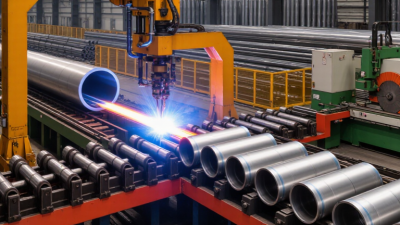
Forming capability deserves close attention. Inspect the number of forming stands, roll adjustment method, cage stability, and sizing accuracy. Strong forming control helps prevent edge waves, oval pipes, and uneven weld pressure. The high frequency system should maintain stable power while the impeder, squeeze rolls, and weld zone work together. Cooling capacity also matters during long production runs.

Watch the weld closely.

Evaluate tooling changeover time and the operator’s access to adjustment points. Small details matter. Measure finished pipes with calipers, wall-thickness gauges, and a straightness check after trial production. Request samples from several sizes, not only the easiest one. A machine may perform well on thin wall tubing but struggle with heavier sections. That gap should be documented before purchase. My own assessment would remain cautious: published specifications rarely show every production limitation. Reliable decisions come from witnessed trials, maintenance records, and clear tolerance results.

Compare Welding Systems, Materials, and Production Speed

How to Choose the Best High Frequency Pipe Making Machine

Choosing a high frequency pipe making machine starts with the welding system. Contact welding suits stable carbon steel production and usually offers efficient heat transfer. Induction welding reduces electrode wear but may require tighter coil adjustment. Your material matters. Galvanized steel needs controlled heat and reliable surface cleaning. Stainless steel demands stronger tooling and careful edge preparation. The World Steel Association reported 1.89 billion tonnes of crude steel production in 2023. That scale increases pressure for consistent, high-volume tube production.

Production speed must match the pipe diameter, wall thickness, and target quality. Many commercial lines operate between 20 and 120 meters per minute. However, maximum speed can hide frequent stops and excessive scrap. Track actual output, weld rejection, setup time, and energy use. A line producing 90 meters per minute may underperform one producing 65 meters with better uptime. I have seen speed targets fail when operators ignored coil variation. That is an uncomfortable but useful lesson.

Tips: Request trial runs with your actual steel grade and thickness. Ask for measured speed, weld strength, scrap rate, and changeover time. Compare contact and induction systems under identical conditions. Check whether the forming section supports future diameter changes. World Steel Association production data confirms strong steel demand, but demand alone cannot justify an oversized machine. A smaller, stable line may fit your workforce better. Recheck the figures after one production month.

Check Automation, Quality Control, and Operational Safety

Choosing the best high frequency pipe making machine requires more than checking production speed. Automation should reduce variation, not hide problems. Look for automatic strip feeding, servo-controlled forming, sensor feedback, and clear alarm displays. Recipe storage can shorten changeovers. However, operators still need practical manual controls. Excessive automation may confuse staff during a sensor failure.

Quality control begins at the weld zone. A reliable machine should support continuous weld monitoring, dimensional checks, and stable temperature control. Ask how often measuring devices are calibrated. Check whether production data can be traced to each pipe batch. In my experience, simple gauges placed near the sizing section often reveal drift earlier than software does. That detail matters. A smooth sample does not prove stable production. Test several hours of operation, including material changes and restart conditions.

Operational safety must be visible and testable. Examine guarding around the forming and welding areas, door interlocks, emergency stops, and heat-resistant access points. Confirm that electrical panels are labeled and maintenance isolation procedures are practical. Noise, sparks, sharp edges, and hot surfaces require controls, not warnings alone. Request training records and a documented inspection schedule. I would also test the machine after an intentional fault. Recovery should be controlled, not rushed. No system is flawless, and operators may overlook small alarms during busy shifts. That weakness should shape the training plan and the machine’s safety design.

How to Choose the Best High Frequency Pipe Making Machine - Check Automation, Quality Control, and Operational Safety

Evaluation Area Key Dimension Reference Data or Practical Benchmark Why It Matters Recommended Verification Method
Product Compatibility Tube outside diameter and wall thickness Confirm the complete required range rather than relying on the maximum advertised size. HF tube mills are normally configured for a defined OD and wall-thickness range. Tooling, forming stands, weld power, and sizing capacity must match the actual product mix. Request a product matrix showing minimum and maximum OD, wall thickness, steel grade, and finished tolerance for every target product.
Production Capacity Line speed Many HF welded tube lines operate at approximately 20–120 m/min, depending on tube size, wall thickness, material, weld quality requirements, and finishing operations. The highest empty-line speed may not be achievable during stable production or inspection. Conduct a witnessed trial using representative material and record sustained production speed, scrap rate, and weld quality.
Automation PLC, HMI, and recipe management The control system should provide parameter adjustment, alarm history, password levels, recipe storage, trend displays, and backup or export of production data. Repeatable recipes reduce setup errors and make changeovers more consistent. Check whether operators can create, lock, recall, back up, and restore recipes without modifying protected machine limits.
Automation Automatic speed synchronization Forming, welding, sizing, cutting, and run-out systems should be synchronized through a common control architecture or coordinated drives. Synchronization reduces line tension variation, dimensional instability, and cut-length errors. Test acceleration, deceleration, emergency stop, restart, and product changeover while monitoring line speed and tube movement.
HF Welding Weld power control and monitoring The system should display and record welding frequency, power, current or voltage, weld temperature where applicable, and line speed. Stable electrical and thermal conditions help maintain consistent weld quality. Review real-time trends and verify that abnormal power, frequency, cooling, or speed conditions generate alarms and safe responses.
Quality Control Dimensional measurement Typical inspection points include outside diameter, wall thickness, ovality, straightness, length, burr condition, and weld-bead profile. Tolerances must follow the selected product standard. Dimensional variation can affect assembly, threading, coating, and downstream forming. Use calibrated micrometers, laser gauges, or other suitable instruments and compare results with the applicable ASTM, EN, ISO, or customer specification.
Quality Control Weld inspection Inspection may include visual examination, destructive flattening or flaring tests, metallographic checks, eddy-current testing, or ultrasonic testing, depending on the product specification. A visually acceptable seam may still contain lack of fusion, inclusions, or local discontinuities. Define the inspection frequency, acceptance criteria, calibration method, and automatic reject or marking procedure before purchase.
Quality Control Process data traceability Each coil or production batch should be traceable to material grade, heat or coil number, forming setup, weld parameters, inspection results, and cut length. Traceability supports root-cause analysis, customer documentation, and controlled release of nonconforming product. Verify data export formats, time stamps, batch identification, user access control, and retention periods.
Operational Safety Machine guarding and interlocks Moving rolls, pinch points, rotating shafts, flying cut-off components, and hot surfaces should be guarded. Access doors should use safety-rated interlocks where required by the risk assessment. Most serious injuries occur around unguarded movement, stored energy, and unexpected restart. Perform a documented risk assessment using ISO 12100 principles and test every guard, interlock, and restart-prevention function.
Operational Safety Emergency stop and energy isolation Emergency-stop devices should be readily accessible and designed according to applicable machinery safety requirements. Electrical, pneumatic, hydraulic, mechanical, and thermal energy must be isolatable. Emergency stopping does not replace lockout/tagout procedures during maintenance. Check emergency-stop response, residual energy, isolation points, lockable disconnects, and documented maintenance procedures.
Operational Safety High-frequency and thermal protection The welding section should include enclosure or shielding, cooling-flow monitoring, over-temperature protection, electrical fault protection, and controlled access to HF components. HF equipment and welded tubing can create electrical, thermal, fire, and burn hazards. Review the HF generator enclosure, cooling alarms, access control, grounding, thermal shielding, and maintenance clearance.
Electrical Compliance Control-panel and machine electrical design The electrical design should be assessed against applicable requirements such as IEC 60204-1 or the governing local machinery and electrical regulations. Proper electrical design improves fault protection, maintenance safety, and regulatory acceptance. Request electrical schematics, short-circuit ratings, protective-device details, grounding information, and conformity documentation.
Maintenance Changeover and tooling time Measure the time required for roll changes, tooling adjustment, weld setup, sensor calibration, and first-article approval. Actual time depends on product range and tooling design. Shorter, repeatable changeovers increase available production time and reduce setup scrap. Run a complete changeover trial with the intended operators and record labor hours, adjustment count, and first acceptable tube length.
Reliability Cooling, lubrication, and spare parts Critical systems should have monitored cooling flow, accessible lubrication points, component identification, recommended spare-part lists, and documented preventive-maintenance intervals. Poor cooling or lubrication can cause weld instability, bearing damage, unplanned downtime, and premature component failure. Review maintenance schedules, alarm limits, consumable life, spare-part lead times, and local technical support arrangements.
Acceptance Testing Factory and site acceptance criteria The purchase specification should define output rate, dimensional tolerances, weld-test results, cut-length accuracy, alarm functions, safety functions, documentation, and operator training. Clear acceptance criteria convert general claims into measurable contractual requirements. Use representative raw material and approved test procedures for both factory acceptance testing and site acceptance testing.
Selection note: Reference ranges are general industry guidance. Final machine requirements should be confirmed against the applicable product standard, material grade, tube dimensions, production volume, local safety regulations, and documented acceptance tests.

Assess Supplier Support, Maintenance, and Total Ownership Cost

How to Choose the Best High Frequency Pipe Making Machine

Supplier support should be judged before the purchase order, not after a production problem. Ask for response times, technician availability, spare-part locations, and training details. A reliable supplier provides clear electrical diagrams, operating manuals, and commissioning procedures. Request references from factories producing similar pipe sizes and materials. Their answers often reveal more than polished sales presentations.

Maintenance planning directly affects output and operating stability. Check access to welders, sensors, bearings, rollers, and control components. Inspect the machine layout during a demonstration. Can one technician reach the welding area safely? Are adjustment points labeled clearly? Small design details reduce downtime. They also reduce guesswork. However, maintenance estimates are not always realistic. Dust, coolant, operator habits, and material variation can change service intervals.

Total ownership cost includes much more than the machine price. Calculate electricity use, tooling changes, labor, consumables, training, software support, and planned shutdowns. Compare expected production speed with actual usable output. A faster line may waste more material during setup. That matters. Ask for a five-year cost model with assumptions shown separately. Include shipping, installation, upgrades, and emergency service rates. A low initial quote can become expensive when support is weak. Buyers should challenge optimistic promises and record every clarification in the contract.

How to Choose the Best High Frequency Pipe Making Machine

Weighted supplier evaluation benchmark: support, maintenance readiness, and five-year ownership cost control.

The score is based on a 100-point procurement model: technical support response, preventive maintenance planning, spare-parts availability, operator training, warranty coverage, and total ownership cost transparency. A higher score indicates lower operational risk and better long-term value. Confirm these benchmarks with supplier quotations, service-level agreements, maintenance records, and energy-cost assumptions before purchasing.