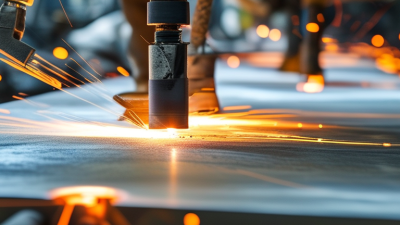
Choosing among China’s top 10 Carbon Steel Tube Mill Pipe Making Machine manufacturers requires more than comparing prices. A reliable machine must form steel consistently, weld accurately, and maintain stable output during long production shifts. The right choice also depends on tube diameter, wall thickness, steel grade, line speed, and factory space.
In my experience reviewing tube production equipment, small details often reveal major differences. Observe the forming stands, weld box, sizing section, and cooling system closely. Check whether rolls are properly machined and whether adjustment markings remain clear after repeated use. A practical supplier should provide test reports, installation guidance, spare parts, and responsive technical support. These details matter when a production line stops at 2 a.m.
As manufacturing expert W. Edwards Deming said, “Quality comes not from inspection, but from the improvement of the production process.” His principle applies directly to tube mills. A machine cannot depend only on final inspection. It needs stable control from decoiling through cutting. This overview examines ten leading Chinese manufacturers through that practical lens. It considers engineering experience, automation, weld quality, maintenance access, energy use, and after-sales reliability.
No ranking is perfect. Some suppliers present impressive specifications but offer limited evidence from real factories. Others may build slower lines yet provide better support. That difference is easy to miss. Buyers should request sample tubes, production references, and a live factory demonstration before deciding. A polished brochure is not proof. Careful verification remains essential.
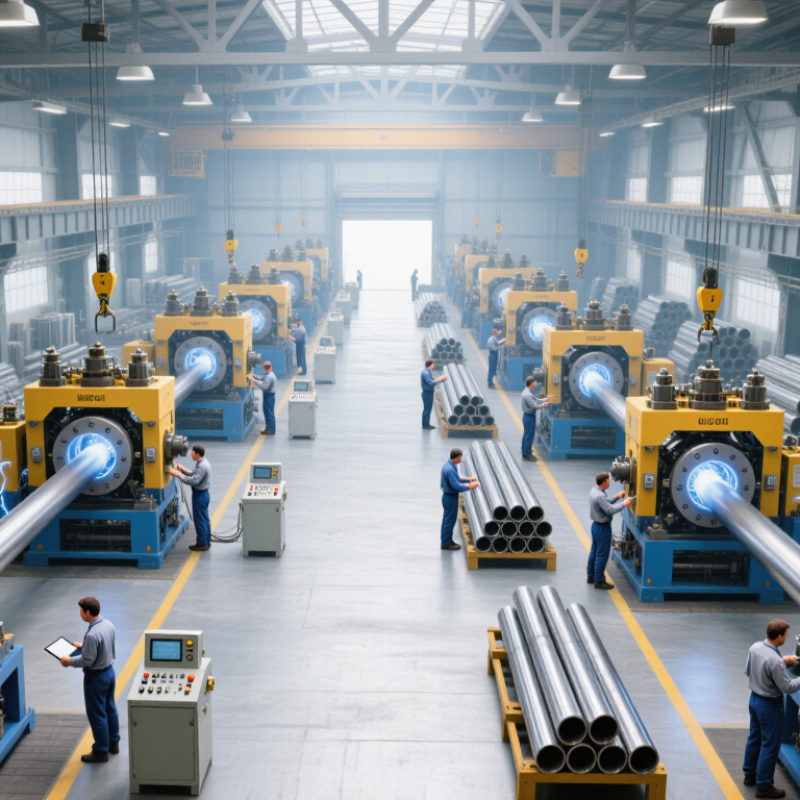
Carbon steel tube mill machines shape flat steel strip into continuous tubes through forming, welding, sizing, and cutting. In Chinese manufacturing plants, these lines support construction, machinery, energy, furniture, and transport applications. Their value comes from stable production, adjustable tooling, and efficient material use.
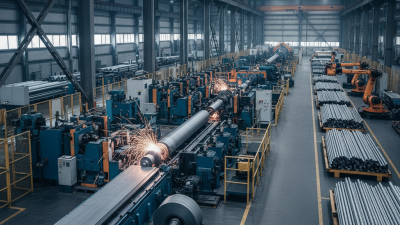
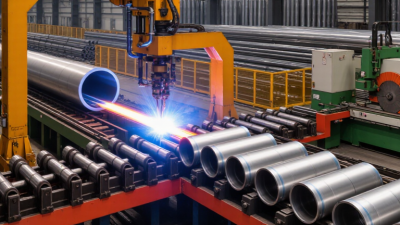
A typical line begins with an uncoiler and strip straightener. Forming rolls gradually bend the strip without forcing a sharp change. High-frequency welding then joins the edges, while squeeze rolls control the weld bead. Sizing stands refine the diameter and roundness. Flying saws cut tubes to fixed lengths, often within tight production tolerances.
From practical operation, alignment matters more than many buyers expect. A small roll-setting error can create uneven walls, noisy welding, or frequent scrap. Experienced technicians check strip tension, electrode condition, cooling flow, and weld temperature during each shift. The process is not flawless. Even a well-designed mill may need slower speeds for thin materials or difficult grades. Operators must also inspect weld quality through visual checks and approved testing methods.
Machine selection depends on tube diameter, thickness range, steel grade, production speed, and required surface finish. Automatic controls improve repeatability, but they do not replace skilled judgment. Maintenance records, spare-part access, safety guarding, and operator training deserve equal attention. A fast line is not always the best line. It may simply reveal weaknesses sooner.
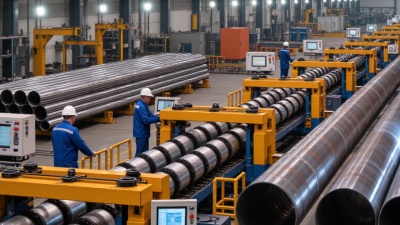
Carbon steel tube production depends on product size, wall thickness, and required strength. The main machine types include ERW tube mills, spiral welded pipe mills, seamless piercing lines, and precision cold-drawing equipment. ERW mills form strip through rollers, then weld the seam using high-frequency current. They suit structural tubes, furniture sections, and many fluid-service applications. Spiral mills create large-diameter pipes from coiled strip. Seamless lines use rotary piercing, elongation, sizing, and heat treatment. They handle demanding pressure applications, but require higher investment and tighter process control.
The World Steel Association reported about 1.89 billion tonnes of crude steel production in 2023. This large base supports continued demand for efficient forming and testing equipment. Industry machinery reports also identify automated sizing, ultrasonic inspection, and servo-controlled cutting as major productivity trends. In practice, a stable weld bead matters more than impressive line speed. A fast mill can produce more rejects. That is an uncomfortable trade-off. Quality systems should include weld monitoring, dimensional checks, hydrostatic testing, and traceable batch records.
Tips:
Match the mill to the tube specification, not only the target output. Check strip-width range, thickness tolerance, motor capacity, tooling changeover time, and maintenance access. Ask for measured production data under similar steel grades. A supplier’s brochure may show ideal results. Real factory conditions are less perfect. Leave space for cooling, inspection, and safe material handling.
Reference: World Steel Association, World Steel in Figures 2024; OECD, Steel Market Developments, 2024.
Carbon steel tube mill machines convert flat steel strip into round or shaped pipes through a controlled forming process. The World Steel Association reported about 1.89 billion tonnes of crude steel production worldwide in 2023. This huge volume supports demand for efficient tube production, but output quality still depends on process control.
A typical line begins with a decoiler, which feeds the steel coil continuously. A leveler removes coil memory and prepares a stable strip. Forming rolls gradually bend the strip into a circular shape. High-frequency welding then joins the edges under controlled heat and pressure. The weld area is cooled, trimmed, and inspected. Sizing rolls correct the final diameter. A flying saw cuts each pipe to length without stopping production. Operators check wall thickness, ovality, surface defects, and weld integrity. ASTM and ISO requirements often guide these inspections, depending on the intended application.
Tips: Keep the strip centered before forming. Small alignment errors can become visible pipe bends. Monitor welding power, line speed, and cooling water together. A perfect setting on paper may fail after coil thickness changes. In real production, scale buildup and worn rolls can quietly reduce accuracy. Record these changes instead of blaming the machine too quickly. Poor data makes good maintenance difficult.
The following list covers the principal machine types used in carbon steel tube mill lines. Capacity, dimensions, wall thickness, and speed are typical engineering ranges and vary according to steel grade, tooling design, tube size, weld method, and production requirements.
| No. | Machine or Line Section | Main Manufacturing Function | Typical Carbon Steel Input | Typical Product Range | Typical Line Speed | Typical Production Capacity | Important Quality Control Point |
|---|---|---|---|---|---|---|---|
| 1 | Coil Loading and Uncoiling Machine | Loads the steel coil and continuously unwinds strip into the tube mill line while maintaining controlled strip tension. | Carbon steel strip, commonly low-carbon grades; approximately 1.5–12 mm thick. | Coil width generally 100–2,000 mm; coil mass commonly 3–30 tonnes. | Up to approximately 80 m/min, depending on coil weight and strip thickness. | Determined by strip width, thickness, and line speed. | Stable uncoiling, correct strip centering, and prevention of strip surface damage. |
| 2 | Strip Head Cutting and End-Welding Machine | Removes damaged coil ends and welds the trailing end of one coil to the leading end of the next coil for continuous production. | Low-carbon and structural carbon steel strip, including galvanized or pickled strip when compatible with the welding process. | Strip thickness typically 1.5–8 mm; strip width commonly 100–1,500 mm. | Usually operates during line stops or at reduced entry speed. | Supports continuous operation and reduces material loss between coils. | Weld strength, strip alignment, weld flatness, and reliable removal of defective coil ends. |
| 3 | Strip Accumulator | Stores a reserve of strip so the forming and welding section can continue while a new coil is being loaded and joined. | Carbon steel strip suitable for the selected forming line. | Common storage length approximately 50–300 m, depending on mill configuration. | Designed for line speeds from approximately 20–120 m/min. | Improves line utilization by reducing interruptions during coil changeover. | Consistent strip tension, smooth strip tracking, and adequate storage capacity. |
| 4 | Forming Mill Stand Section | Gradually bends flat steel strip into a round, square, rectangular, or specialized tube shape through multiple roll stands. | Low-carbon, structural, and selected high-strength carbon steel strip. | Round tube diameters commonly 20–610 mm; square and rectangular sizes depend on tooling. | Approximately 20–100 m/min for many welded tube applications. | Continuous tube shell with controlled shape and dimensional accuracy. | Correct roll alignment, uniform forming strain, edge condition, and tube roundness. |
| 5 | High-Frequency Welding Machine | Heats the abutting strip edges by high-frequency electrical energy and presses them together to create a longitudinal weld. | Electrically weldable carbon steel and low-alloy steel strip. | Commonly used for tube diameters approximately 20–610 mm, depending on mill size. | Approximately 20–120 m/min; welding power is matched to strip thickness and speed. | Longitudinally welded tube with a continuous weld seam. | Weld heat input, edge pressure, impedance position, seam penetration, and absence of lack-of-fusion defects. |
| 6 | Weld Bead Removal and Seam Conditioning Unit | Removes excess external weld bead and, when specified, conditions the internal seam for improved surface quality and clearance. | Welded carbon steel tube with an ERW longitudinal seam. | Tube diameters commonly 20–610 mm; wall thickness approximately 1.5–12 mm. | Generally synchronized with the forming and welding line. | Cleaner seam profile and improved suitability for downstream sizing, coating, or service. | Uniform bead removal without gouging the parent metal or weakening the weld zone. |
| 7 | Sizing and Straightening Mill | Calibrates the finished tube diameter or section dimensions and corrects straightness after welding and cooling. | Hot-welded carbon steel tube, cooled before final sizing. | Round, square, and rectangular sections; dimensional tolerance depends on product standard and tooling. | Approximately 20–100 m/min for typical production lines. | Finished tube with controlled outside dimensions, shape, and straightness. | Outside diameter, corner radius, wall uniformity, ovality, and straightness. |
| 8 | Flying Cut-Off Machine | Cuts continuously moving tube into predetermined lengths without stopping the production line. | Sized carbon steel tube, round or shaped section. | Typical cut lengths from approximately 4 to 12 m; other lengths are possible with suitable controls. | Synchronized with line speed, commonly up to approximately 100 m/min. | Accurately cut commercial lengths with reduced production interruption. | Cut-length accuracy, square cut ends, burr control, and synchronization with tube travel. |
| 9 | End Facing, Chamfering, or Threading Machine | Prepares tube ends by removing burrs, creating a chamfer, facing the end, or forming threads for mechanical and piping applications. | Carbon steel tube complying with the required dimensional and mechanical standards. | Commonly applied to approximately 20–610 mm outside diameter, subject to tooling configuration. | Usually batch-based or semi-automatic; cycle time varies with diameter and operation. | Ready-to-use tube ends for coupling, welding, fitting, or threaded connections. | End squareness, chamfer angle, thread profile, burr removal, and dimensional consistency. |
| 10 | Hydrostatic Testing, Inspection, and Packing System | Checks pressure tightness, verifies dimensions and surface condition, marks accepted products, and bundles finished pipes for shipment. | Finished carbon steel welded pipe for structural, mechanical, or pressure-service applications. | Test pressure and pipe size selected according to applicable product standard and service requirement. | Typically batch-based; testing time depends on pressure, diameter, length, and acceptance criteria. | Inspected, identified, bundled, and shipment-ready steel pipes. | Leak tightness, dimensional compliance, visual inspection, traceability marking, and secure packaging. |
When evaluating China’s carbon steel tube mill equipment, start with practical output, not a catalog number. Confirm the target tube diameter, wall thickness, steel grade, and production speed with test material. A reliable mill should maintain stable weld alignment while strip edges move through forming stands. Inspect roll-changing time, frame rigidity, and adjustment access on the factory floor. Small delays become costly.
The welding section needs close attention. Ask for documented control of voltage, current, squeeze pressure, and cooling flow. Check whether sensors can detect strip wandering, weld temperature changes, and sudden speed loss. Automatic tracking is useful, but operators still need clear alarms and manual controls. Review the cut-off saw, sizing unit, and run-out table together. A fast mill with a weak saw is not efficient.
Energy use, spare parts, software support, and training often decide long-term value. Request sample tubes, dimensional reports, weld test records, and a realistic acceptance procedure. Ask how quickly critical rolls, bearings, and electrical components can be replaced. Verify measuring devices and calibration records before trusting reported accuracy. A polished demonstration can hide difficult maintenance. I would inspect weld beads after several hours, not only during a short trial. One missed issue matters. Leave room for uncertainty.
During factory evaluations, I look beyond glossy catalogs. A reliable manufacturer should explain strip width, wall thickness, line speed, and steel grade limits clearly. Good suppliers also provide roller design records, welding parameter guidance, electrical drawings, and commissioning support. Small details matter. A stable forming pass can reduce edge cracking and repeated adjustments.
The stronger China-based manufacturers offer customized layouts for different workshop sizes. Some build compact lines for small-diameter tubes, while others produce heavy-duty systems for larger structural pipes. Servo feeding, laser measurement, and closed-loop control can improve consistency. However, automation does not replace skilled operators. Training remains essential. No ranking is perfect. After-sales response, spare-part availability, and realistic production testing may matter more than a low quotation. Buyers should request sample production, inspect key components, and verify references from comparable factories before signing a technical agreement. The best choice depends on material range, output targets, labor conditions, and long-term maintenance plans.