Leave Your Message

China Top 10 High Frequency Tube Mill Making Machine Suppliers?

Choosing a reliable High Frequency Tube Mill Making Machine supplier in China requires more than comparing catalog prices. The right partner must understand steel grades, tube dimensions, welding speed, and production targets. This guide examines ten notable Chinese suppliers through practical purchasing criteria. These include manufacturing experience, engineering capability, quality control, export service, and after-sales support.

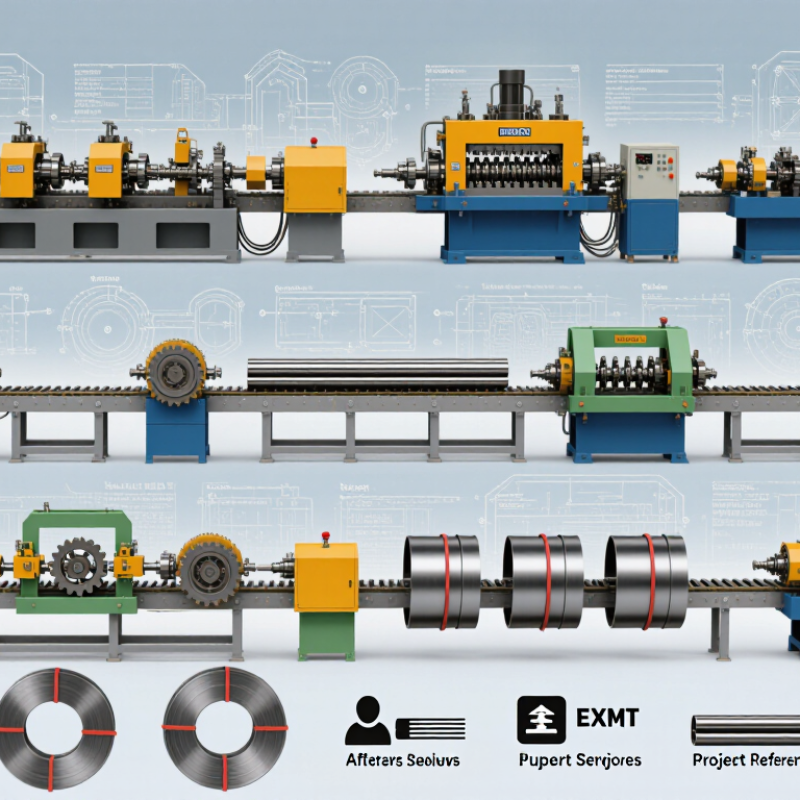
A capable supplier should provide clear machine specifications and verifiable project references. Buyers should examine forming stands, high-frequency welders, sizing sections, flying saws, and electrical control systems. Details matter. A small mismatch in strip width can cause unstable welding or frequent downtime. Factory visits, video inspections, and sample production can reveal weaknesses that brochures often hide. Certifications are useful, but they should support real evidence rather than replace it.

The selected companies are discussed from a buyer’s perspective, not through unverified advertising claims. Their product ranges, customization ability, delivery practices, and technical communication deserve careful comparison. Some suppliers may excel at standard carbon-steel tube lines, while others handle stainless steel or larger diameter applications more effectively. No supplier fits every factory. That is worth remembering. Pricing can also be misleading when installation, spare parts, training, and commissioning are excluded. This overview aims to help manufacturers ask sharper questions, reduce procurement risk, and identify a long-term equipment partner. Further verification remains essential before signing any contract.
China Top 10 High Frequency Tube Mill Making Machine Suppliers?

High-Frequency Tube Mill Technology: 300–450 kHz Welding Fundamentals

China Top 10 High Frequency Tube Mill Making Machine Suppliers?

High-Frequency Tube Mill Technology: 300–450 kHz Welding Fundamentals

When evaluating tube mill suppliers in China, buyers should examine welding control, not only advertised output. At 300–450 kHz, the system heats strip edges rapidly through high-frequency current. The current travels mainly along the edges, creating a narrow weld zone before the squeeze rolls close the seam. Small changes matter. Strip grade, thickness, speed, and edge condition all influence the result.

A stable process needs accurate impedance matching, suitable coil positioning, and a correctly selected impeder. The impeder concentrates magnetic energy near the weld point. Poor cooling can weaken it quickly. Squeeze pressure must remove the molten material without producing excessive internal bead. Operators should monitor voltage, current, frequency, line speed, and weld temperature together. One reading rarely explains a defect.

In practical mill trials, clean edges often improve consistency more than extra power. Burrs, oil, and uneven forming can disturb the current path. A neat calculation is not enough. Real production includes vibration, material variation, and occasional setup errors. This is where supplier experience becomes measurable: clear process records, repeatable test results, accessible technical support, and documented safety controls. Buyers should request welded samples, destructive test data, and settings for several tube sizes. Even then, a trial may need adjustment. That is normal, not failure.
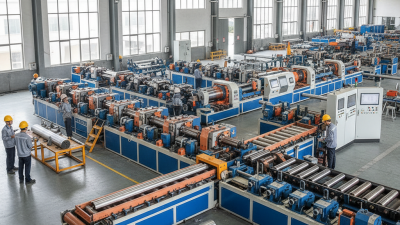
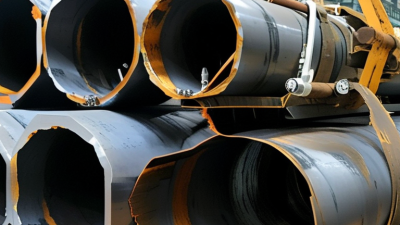
How to Rank China’s Top 10 Tube Mill Machine Suppliers

How to Rank China’s Top 10 Tube Mill Machine Suppliers

Ranking China’s top ten high-frequency tube mill suppliers requires more than comparing catalog prices. I would begin with verified production evidence, not sales claims. The World Steel Association reported that China produced about 1,019 million tonnes of crude steel in 2023. That scale supports strong manufacturing experience, but it does not guarantee reliable equipment. Each supplier should be assessed through factory audits, customer references, and recorded commissioning results.

Technical performance should carry the greatest weight. Compare forming stability, welding frequency, line speed, strip-width range, wall-thickness tolerance, and cutting accuracy. A practical score might assign 30% to machine performance, 20% to build quality, and 20% to after-sales support. The remaining points can cover delivery history, spare-parts availability, training, energy consumption, and compliance documentation. IEA reports that the steel sector produces roughly 7% of global energy-related emissions. Therefore, efficient drives, reduced scrap, and stable welding deserve measurable ranking points.

Test the details. Ask for mill-speed records, weld rejection rates, and production videos with similar steel grades. Inspect roll materials, bearing protection, electrical cabinets, and safety interlocks. ISO 9001 certification helps, but it proves process control, not perfect output. A neat score is useful, but never perfect. My ranking would also include a penalty for vague guarantees, delayed technical responses, and missing reference projects. Real performance appears after installation, when the first night shift begins.

China Top 10 High Frequency Tube Mill Making Machine Suppliers — Ranking Framework

A practical scoring model for comparing high-frequency tube mill machine suppliers without using company or brand names. The weighting emphasizes measurable machine performance, manufacturing capability, customization, and after-sales support.

Recommended weighting: technical performance 25%, product quality 20%, production capacity 15%, customization 15%, service and spare parts 10%, delivery reliability 10%, and compliance documentation 5%. Final rankings should be validated with technical audits, factory inspections, and verified customer references.

Supplier Profiles: Mill Capacity, Tube Sizes, and Production Speeds

China Top 10 High Frequency Tube Mill Making Machine Suppliers?

Evaluating suppliers requires more than comparing advertised speed. The World Steel Association’s October 2024 Short Range Outlook forecasts global steel demand at about 1.75 billion tonnes in 2024 and 1.80 billion tonnes in 2025. This supports continued investment in efficient tube production.

For medium structural tubes, practical mill capacity often ranges from 2 to 8 tonnes per hour. Actual output depends on strip width, wall thickness, steel grade, and welding stability.

Tube size is equally important. A compact mill may produce tubes from 20 to 76 millimeters, while larger systems can cover approximately 165 to 426 millimeters.

Production speeds

30 to 120 meters per minute

Key consideration

Speed alone can mislead.

Thin-wall carbon steel can run faster. Thick or high-strength strip usually requires slower forming and tighter control. Speed alone can mislead.

Look closely at supplier profiles for:

accumulator volume, roll-change time, weld monitoring, and sizing accuracy.

A machine rated at 100 meters per minute may deliver less during frequent size changes. That difference matters.

The International Energy Agency’s 2024 industrial energy analysis also reinforces the value of efficient motors and reduced idle time, especially in high-volume plants.

Buyers should request test-run records, dimensional reports, and measured scrap rates. Some supplier data remains optimistic. It deserves verification.

Technical Comparison: 0.5–12 mm Strip Thickness and ±0.1 mm Accuracy

China Top 10 High Frequency Tube Mill Making Machine Suppliers?

For 0.5–12 mm strip thickness, supplier comparison must begin with process stability. A 0.5 mm strip needs precise uncoiling and edge control. A 12 mm strip demands stronger forming stands and higher welding capacity. The International Energy Agency reported global steel demand near 1.8 billion tonnes in 2024, keeping productivity pressure high across tube production. That demand does not justify weak tolerance claims.

A credible machine review should verify ±0.1 mm accuracy on finished tube dimensions, not only on the incoming strip. Engineers should check mill speed, weld temperature control, roll-pass design, sizing stability, and cutting repeatability. Independent measurements should cover at least three coil batches. ISO-based quality systems can support traceability, but certification alone cannot prove machine performance. The acceptance test matters more.

Look closely at the details. A stable line should limit visible weld flash, prevent edge cracking, and maintain straightness after sizing. Laser gauges, calibrated micrometers, and recorded sampling intervals improve confidence. In practice, thin strip often exposes vibration problems first. Thick strip may reveal motor overload or poor forming alignment. I would question any supplier promising ±0.1 mm across every size without specifying material grade, tube diameter, speed, and measurement method. That gap is easy to overlook.

Purchasing Criteria: Automation, Testing Standards, Service, and ROI

When comparing China’s top ten high-frequency tube mill suppliers, automation should mean measurable control, not a glossy interface. Deloitte’s 2024 Smart Manufacturing and Operations Survey found that 86% of executives expect smart manufacturing to improve competitiveness within five years. For a tube mill, request automatic strip centering, closed-loop weld power, recipe storage, and production alarms. Ask for line speed at your actual tube diameter, not the brochure’s maximum speed. A factory acceptance test should record weld stability, dimensional tolerance, scrap rate, and changeover time. Measure the proof. Require sample coils and signed test records.

Testing must match the intended tube specification and destination market. ISO 9001 certification indicates process discipline, but it does not prove machine performance. Depending on the application, verify requirements against ASTM A500, EN 10219, or another agreed standard. Check calibration certificates for gauges, weld monitors, and non-destructive testing equipment.

The International Federation of Robotics reported 541,302 industrial robots were installed globally in 2023. This trend makes controls expertise and spare-parts availability increasingly important. Confirm remote diagnostics, technician response times, training hours, and critical component stock. Calculate ROI from labor, scrap, electricity, uptime, and maintenance downtime.

A low purchase price can mislead. I still find payback estimates too optimistic when unscheduled stoppages are ignored. Request a 12-month cost model with conservative output assumptions. That gap matters.