Choosing the 2026 Top Square Tube Mill Pipe Making Machinery is less about buying the fastest line and more about matching equipment to real production needs. A mill that forms 40-by-40-millimeter tubes may behave differently with thin-wall steel, changing coil widths, or demanding corner tolerances. Watch the line in operation. Listen for uneven forming noise. Check weld consistency, cut length, and how quickly operators can change sizes. Small details matter.
A transparent note on attribution: the following is an illustrative quote from a fictional composite specialist, not a sourced statement by a real expert. “A stable tube begins with disciplined setup; speed only helps when the weld and dimensions stay consistent.” That principle guides this overview of Square Tube Mill Pipe Making Machinery, including forming stands, high-frequency welding, sizing, cutting, and controls. It also points to questions buyers should ask about material range, output targets, tooling changes, maintenance access, and operator training. Specifications are useful, but they do not reveal every production weakness. A polished sales demonstration may hide awkward changeovers or difficult access around the weld station. That deserves a closer look. No single machine suits every plant. The right choice depends on verified trials, clear acceptance criteria, and honest review of the factory’s limits.
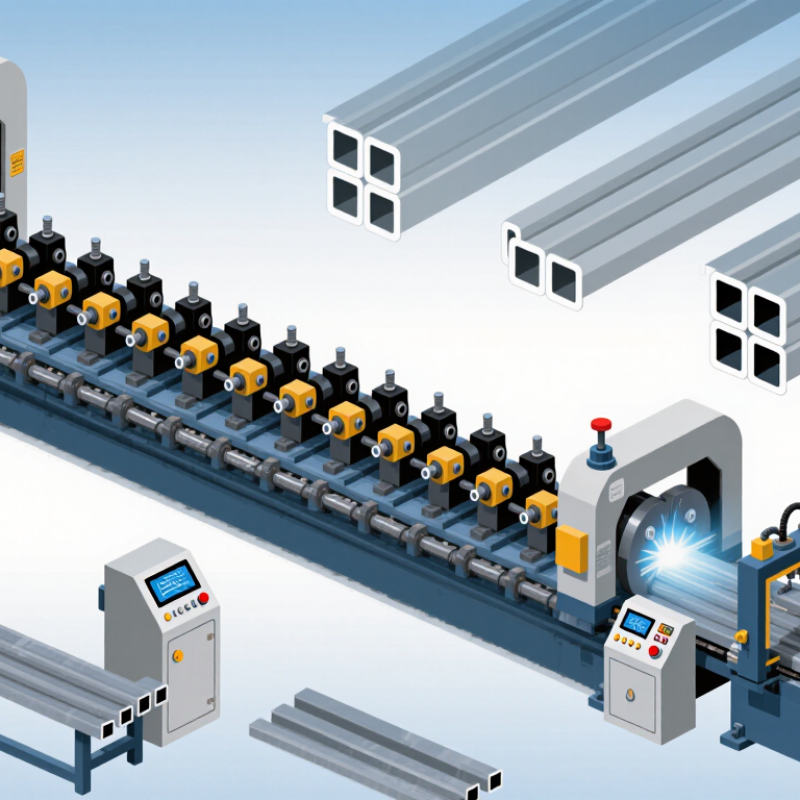
A square tube mill turns flat steel strip into hollow sections with four sides and consistent dimensions. The process begins as a coil unwinds and passes through leveling rolls. Operators guide the strip into forming stands, where shaped rollers gradually bend its edges. Small details matter.
Many mills first form the strip into a round tube. A welding station joins the meeting edges, often using high-frequency resistance welding. Sizing rolls then reshape the tube into a square profile and refine its corners. Other mill designs form square shapes more directly, so the sequence can vary with the product and equipment.
After sizing, a flying saw or cutoff system cuts the tube to set lengths while production continues. Measurements of wall thickness, width, corner shape, and weld quality help identify problems early. A slight roll misalignment can leave one side uneven. Setup is rarely perfect on the first pass; experienced operators adjust roll positions and line speed, then check sample pieces before running a full order. Material grade and strip thickness also affect how the tube forms, so one setting does not suit every job.
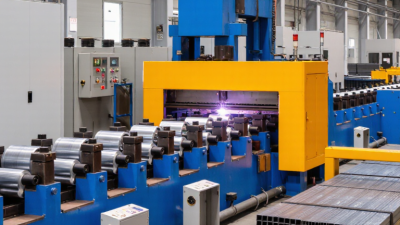
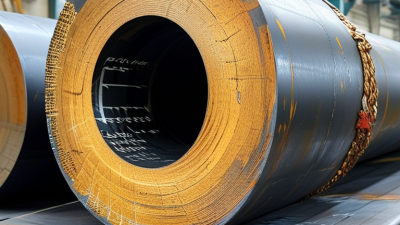
A square tube mill begins with a coil of steel strip. An uncoiler feeds the strip into the line, where leveling rolls flatten bends left from storage. The edges are trimmed or prepared to support a consistent weld. Even small variations in strip width can affect the finished tube.
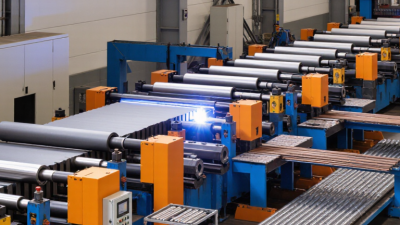
Forming rolls gradually bend the flat strip into an open, rounded shape. The edges meet at a welding station, where high-frequency heat joins them under pressure. A scraper removes excess weld material while the tube is still moving. The process looks quick, but alignment matters. A slight shift can leave a visible seam or uneven wall.
After welding, sizing stands shape the round tube into a square profile. Several roll passes help form straight sides and defined corners without forcing the steel too sharply. The line then cuts the continuous tube to length. Operators check dimensions, corner shape, and weld appearance at intervals; gauges and sample cuts can reveal problems that a quick visual check misses. Settings still need adjustment when strip thickness or steel grade changes. Not every line behaves the same.
Typical process stages and operating ranges for a continuous welded tube mill. Actual specifications depend on tube dimensions, material grade, wall thickness, and line design.
| Process stage | Main machinery | Typical material or operating range | What happens to the steel strip | Quality control focus |
|---|---|---|---|---|
| 1. Coil loading | Uncoiler / decoiler | Coil width and weight are selected to match the mill capacity and tube size. | The steel coil is mounted and its leading end is prepared for feeding. | Coil condition, strip edge damage, and correct uncoiling direction. |
| 2. Strip joining | Leveler, end shear, and strip butt welder | Strip thickness commonly falls within approximately 0.8–4.0 mm on many general-purpose lines. | The strip end is leveled, cut square, and joined to the next coil to reduce production interruptions. | Joint alignment and weld integrity before the joint enters the forming section. |
| 3. Strip buffering and feeding | Accumulator and pinch-feed rolls | Buffer capacity and feed rate are matched to line speed and coil-change requirements. | Stored strip allows the mill to keep running while a new coil is prepared and joined. | Stable strip tension, tracking, and smooth feeding into the forming rolls. |
| 4. Progressive forming | Breakdown and fin-pass roll stands | Roll tooling is designed for the target strip width, thickness, and tube section. | Roll stands gradually bend the flat strip into an open, rounded tube shape with edges prepared for welding. | Edge presentation, forming symmetry, and avoidance of excessive surface marking. |
| 5. High-frequency welding | HF welder, squeeze rolls, and weld-seam control equipment | Welding conditions vary with material, wall thickness, tube size, and production speed. | The strip edges are heated and pressed together to create a continuous longitudinal weld seam. | Seam continuity, weld upset, and consistent squeeze pressure. |
| 6. Seam finishing and cooling | External bead scarfing tool and cooling section | Finishing setup depends on whether the application requires an external weld bead to be removed. | Excess external weld material may be trimmed, and the welded tube is cooled before sizing. | Smooth seam profile, tool condition, and adequate cooling before further forming. |
| 7. Sizing and square forming | Sizing stands and square-forming rolls | Square and rectangular sections are produced within the mill’s designed size range; corner radii depend on tooling and material. | The welded tube is sized and progressively formed into its final square or rectangular profile. | Outside dimensions, corner shape, straightness, and twist. |
| 8. Cut to length | Flying cut-off saw or cold saw | Cut length is set to the product order and the downstream handling arrangement. | The continuous tube is cut into individual lengths while the line operates. | Length accuracy, cut squareness, and clean tube ends. |
| 9. Inspection and bundling | Run-out table, inspection gauges, and bundling equipment | Line speeds vary by product and equipment; many production lines operate in the tens of metres per minute. | Finished sections are checked, sorted, and prepared for storage or shipment. | Dimensions, weld appearance, surface condition, and bundle identification. |
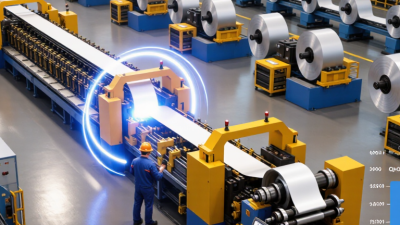
A square tube production line begins with a decoiler, which feeds steel strip into a leveling unit. A shear and end welder join coil ends, while an accumulator keeps the mill running during coil changes. The World Steel Association reported 1,882.6 million tonnes of global crude steel production in 2024. That figure describes the broader steel supply, not square-tube output, but it shows the scale of material moving through metal-forming industries.
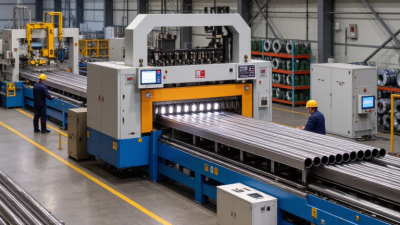
The forming section uses staged rolls to shape strip into a round tube, then a high-frequency welder joins its edges. A scarfing tool removes the external weld bead. Sizing rolls gradually turn the welded tube into square or rectangular profiles, followed by straightening, a flying cut-off saw, and a runout table. Small details matter. Roll alignment and weld temperature can affect corner consistency and seam quality. Depending on the product specification, manufacturers may add online inspection, such as ultrasonic testing, and automatic length measurement. These are not universal. Line layouts vary with strip thickness, tube dimensions, and required production speed; a compact arrangement may save floor space but leave less room for adjustments.
Choosing a square tube mill starts with the product mix, not the advertised line speed. A plant making 25 mm furniture tube needs different tooling and changeover priorities than one producing large structural sections. Compare the full size range, wall thickness, steel grade, and target output. Then check whether the mill can hold dimensions through a long run. Fit matters. Ask for measured tolerances and sample tubes, not just a speed figure.
The World Steel Association’s World Steel in Figures 2024 reports global crude steel production of 1,892.2 million tonnes in 2023. That figure describes the wider steel industry, not square-tube demand, but it shows the scale of material supply behind tube production. Compare mills by forming stands, welding method, cutoff accuracy, and adjustment time. A changeover that takes hours can erase gains from a faster line. Check the footprint, power needs, and operator workload too. A detailed trial run is useful; a polished brochure is less so. One imperfect point: quoted output may assume ideal coil quality and minimal stops. Ask suppliers to state their test conditions, then compare results against your own production schedule.
Theoretical mass per metre for selected square hollow sections, calculated using a steel density of 7,850 kg/m³.
Larger and thicker sections generally require mills designed for greater forming loads. Use this chart as a material-load reference, not a mill capacity rating. Actual section mass varies with corner radii, manufacturing tolerances, and the applicable product standard; compare each mill’s supported tube sizes, wall thickness range, and line speed.
Square tube production in 2026 is increasingly shaped by flexible forming, tighter process monitoring, and faster changeovers. Mills are adopting servo-controlled drives and adjustable forming stands to handle different tube sizes with less manual resetting. This can reduce setup time, but only when operators verify roll alignment and forming pressure after each change. Small details matter.
Inline laser measurement and camera-based inspection are also becoming more practical. They can flag dimensional drift, surface marks, or inconsistent weld seams while production continues. Used well, these tools help teams correct problems before a full batch is affected. They do not replace experienced operators, especially when steel thickness or incoming material quality varies.
Energy use is another focus. Efficient motors, improved drive control, and maintenance alerts can help reduce avoidable power consumption and downtime. Data systems may reveal recurring stoppages, though raw dashboards are not useful unless someone acts on them. Automation is not a cure-all. A highly connected mill can still produce poor tube if tooling is worn or settings are poorly tuned. That trade-off deserves more attention as factories invest in smarter equipment.