7 Tips for Choosing a High Frequency Pipe Welding Machine
Choosing a High Frequency Pipe Welding Machine is not a simple matter of comparing power ratings. In real production, small differences in tube diameter, wall thickness, steel grade, and line speed can affect weld stability. A machine that performs well on thin carbon steel may struggle with stainless steel or larger profiles. That detail is often missed.
Experienced operators usually begin with the production target. They check the required output, welding frequency, power range, coil design, impedance arrangement, and cooling capacity. These factors influence energy transfer and seam quality. Practical testing matters more than attractive brochure numbers. Ask the supplier for sample welds, inspection records, and clear performance data.
Safety and long-term reliability also deserve attention. Look for stable controls, accessible maintenance points, overload protection, and dependable spare-parts support. The machine should match your existing mill, not force costly changes to the whole line. Independent standards and documented testing can strengthen confidence, but certificates alone cannot prove production suitability. Watch the weld.
This guide presents seven useful tips for choosing the right equipment. It considers technical compatibility, operating costs, service response, installation demands, and future production changes. Some recommendations may seem obvious, yet poor decisions often begin with rushed comparisons. I have learned that the cheapest machine is rarely the least expensive option over several years. A careful assessment, realistic trial, and honest discussion with experienced engineers can reveal weaknesses before installation. That reflection is important because every factory has different materials, operators, tolerances, and maintenance habits.
Understanding High Frequency Pipe Welding Machine Fundamentals
High Frequency Pipe Welding Machine Fundamentals
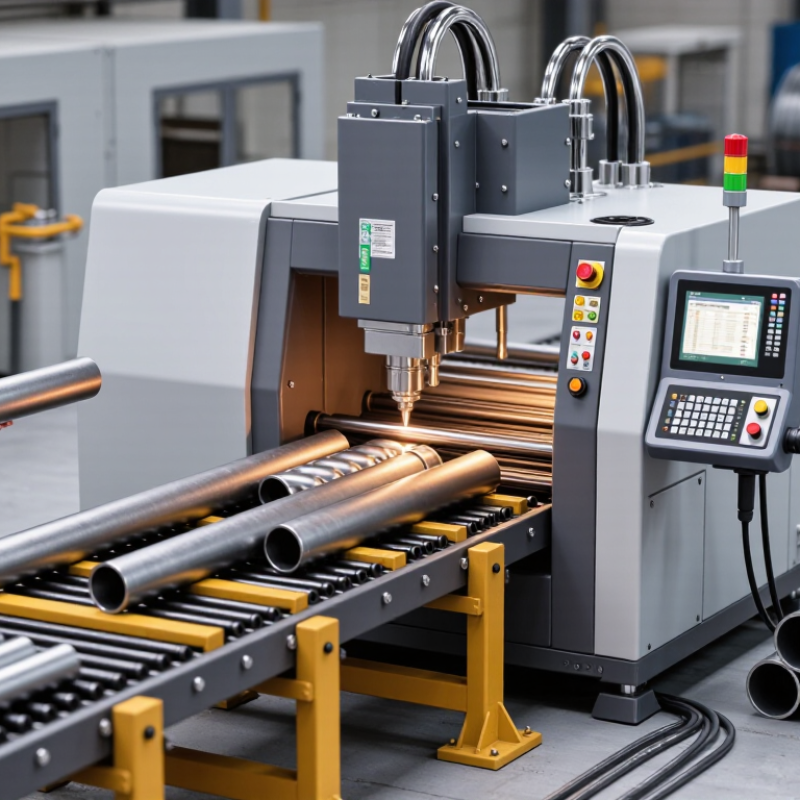
A high frequency pipe welding machine joins strip edges by concentrating electrical current at the seam. Heat forms quickly, while pressure rolls forge the softened edges together. The process depends on frequency, power, material conductivity, tube diameter, wall thickness, and production speed. I have found that a machine rated only by maximum power can mislead buyers. Matching the operating range to the actual tube schedule matters more.
Check seven fundamentals before choosing equipment.
One, confirm stable power output across your planned sizes.
Two, select a suitable frequency range for the material and wall thickness.
Three, inspect the coil and impeder design, because poor positioning wastes heat.
Four, examine cooling capacity, especially during long production runs. Watch the temperature closely. A clean water circuit protects repeatability. Small impurities can create annoying faults.
Five, verify that the forming stand holds alignment under pressure.
Six, require reliable controls, interlocks, grounding, and emergency stopping.
Seven, ask for measurable trial results, including weld appearance, line speed, and destructive test data.
Experienced operators also check access to consumables and technical service. Documentation should explain setup values, not merely display impressive figures. I once underestimated changeover time; that mistake made a capable machine less productive. Leave room for adjustment, because real materials rarely behave exactly like specifications.
Matching Machine Specifications to Pipe Materials and Dimensions
7 Tips for Choosing a High Frequency Pipe Welding Machine
1. Identify the pipe material before comparing power ratings. The World Steel Association’s World Steel in Figures 2024 reports 1,888.2 million tonnes of crude steel production in 2023. That scale reflects major differences in steel grades, coatings, and forming behavior. Carbon steel, stainless steel, and galvanized strip need different heating responses.
2. Match frequency to wall thickness and diameter. Thin-wall pipe usually benefits from higher frequency and a narrower heat-affected zone. Thick-wall pipe may need stronger penetration control. Do not guess.
3. Check the required welding speed. A powerful machine is not automatically productive. Compare output capacity with the mill’s actual forming speed, not an ideal catalog number.
4. Confirm impedance and coil compatibility. The induction coil must fit the pipe diameter closely. Poor coupling wastes energy and creates uneven edges. Leave room for quick tooling changes.
5. Review voltage, current, and duty cycle together. A machine can advertise high power but struggle during continuous production. Ask for measured output data at your target dimensions.
6. Consider material standards, such as ASTM A53, ASTM A106, or ISO 3183. Their requirements can influence testing, heat treatment, and weld quality. A specification sheet may still mislead.
7. Test the exact material and size before purchase. Record weld temperature, line speed, edge condition, and rejection rate. Keep records. Small trials often reveal unstable control, especially with coated strip or changing wall thickness. The overlooked detail is usually cooling, not power.
7 Tips for Choosing a High Frequency Pipe Welding Machine - Matching Machine Specifications to Pipe Materials and Dimensions
| Tip |
Pipe Material |
Typical Outside Diameter |
Typical Wall Thickness |
Suggested Frequency Range |
Indicative Power Range |
Selection Guidance |
1
Match power to the material and wall thickness |
Carbon steel |
20–610 mm |
1.5–12 mm |
150–350 kHz |
100–800 kW |
Use higher output power for thicker walls, larger diameters, and higher line speeds. Confirm the required heating power through production trials. |
2
Choose a frequency suitable for the pipe size |
Low-carbon or galvanized steel |
25–406 mm |
1.2–8 mm |
200–400 kHz |
100–500 kW |
Higher frequencies generally concentrate current closer to the surface and are often suitable for thinner-wall, smaller-diameter tubing. Larger or thicker products may require lower frequency and greater power. |
3
Check conductivity and heat-transfer behavior |
Stainless steel |
15–323 mm |
0.8–6 mm |
250–450 kHz |
80–400 kW |
Stainless steel has higher electrical resistivity than carbon steel, but grades and thicknesses vary. Select a system with stable frequency control, precise impedance adjustment, and adequate cooling capacity. |
4
Allow for the higher conductivity of nonferrous metals |
Aluminum alloy |
25–300 mm |
1–6 mm |
200–450 kHz |
150–600 kW |
Aluminum conducts heat and electricity efficiently, so the machine may need higher current, accurate edge control, and sufficient cooling. Verify compatibility with the alloy and surface condition. |
5
Evaluate line speed and production volume |
Carbon steel or stainless steel tubing |
20–219 mm |
1–4 mm |
250–450 kHz |
100–400 kW |
For continuous production at approximately 20–80 m/min, select enough reserve power to maintain weld temperature during speed changes, coil changes, and normal voltage fluctuations. |
6
Confirm the forming and weld-zone arrangement |
High-strength low-alloy steel |
60–508 mm |
3–10 mm |
150–300 kHz |
250–800 kW |
The welding unit must work with the mill's forming stands, squeeze rolls, induction coil or contact system, and impeder arrangement. Poor alignment can cause defects even when power is adequate. |
7
Prioritize control, cooling, and inspection functions |
Mixed production: steel, stainless steel, or aluminum |
15–610 mm |
0.8–12 mm |
100–450 kHz |
100–800 kW |
For varied products, look for programmable recipes, automatic power and frequency regulation, closed-loop water cooling, overload protection, and weld monitoring. Final settings should be validated against applicable pipe standards and quality tests. |
Note: Frequency and power ranges are general engineering reference values. Actual requirements depend on material grade, electrical properties, pipe geometry, weld-line design, line speed, tooling, and the required production standard.
Evaluating Welding Speed, Frequency Control, and Output Stability
Choosing a high frequency pipe welding machine requires more than comparing rated power. The real test is controlled production. In shop trials, I watch the weld seam under changing line speeds, tube diameters, and wall thicknesses. A machine that performs well on one pipe may struggle on another.
Tip 1: Check welding speed under realistic conditions. Ask for test data using your target material and thickness. Faster production is useful only when the seam remains smooth and penetration stays consistent. Inspect the weld bead closely. Look for pinholes, edge burning, and uneven heating. A dramatic speed claim can hide costly rework.
Tip 2: Evaluate frequency control carefully. Precise adjustment helps match the heating pattern to the pipe size and material. Higher frequency is not automatically better. Operators should be able to change settings gradually, without sudden power jumps. Record frequency, power, line speed, and cooling temperature during trials. This creates evidence for repeatable procedures.
Tip 3: Test output stability for a full production cycle. Measure voltage and current while the machine handles starts, stops, and speed changes. Stable output protects the weld from weak spots. It also reduces operator corrections. Some evaluations focus too much on peak performance. That is a mistake. I would also review maintenance access, alarm records, and calibration documents. One overlooked cooling issue can interrupt an otherwise efficient line.
Comparing Energy Efficiency, Total Cost, and Supplier Support
7 Tips for Choosing a High Frequency Pipe Welding Machine
Energy efficiency should be measured at the weld, not only on the nameplate. The U.S. Department of Energy reports that motor-driven systems can consume more than half of industrial electricity. That makes transformer losses, cooling demand, and idle power financially important. Ask suppliers for measured input power at your actual pipe size, wall thickness, and production speed. A 10% efficiency claim means little without test conditions. Measure it yourself.
Total cost includes tooling, maintenance, rejected welds, downtime, and electricity. NIST Handbook 135 recommends life-cycle costing instead of purchase-price comparison alone. Build a five-year model using local energy rates and realistic operating hours. Include coil changes and cooling-water treatment. Small costs become visible. A cheaper machine may carry expensive consumables.
Supplier support deserves equal scrutiny. Request commissioning records, operator training, spare-parts lead times, and remote diagnostic procedures. The IEA’s Energy Efficiency 2023 report identifies efficiency as a major industrial cost and emissions opportunity, but savings depend on reliable operation. Ask for service response times in writing. Speak with users running similar pipe grades. I have seen impressive demonstrations hide weak after-sales support. That warning is easy to overlook. Performance data should be independently checked, because even good estimates can be wrong.