How to Choose an Automated Tube Mill Pipe Machine in 2026?
Choosing an automated tube mill in 2026 requires more than comparing motor power or advertised production speed. It requires evidence.
The World Steel Association reported global crude steel production of approximately 1.88 billion tonnes in 2024. That scale keeps pressure on manufacturers to improve yield, uptime, and dimensional consistency. Meanwhile, the International Federation of Robotics reported 541,302 industrial robots installed worldwide in 2023. Automation is no longer limited to large automotive plants. It is becoming practical for tube forming, cutting, inspection, and material handling.
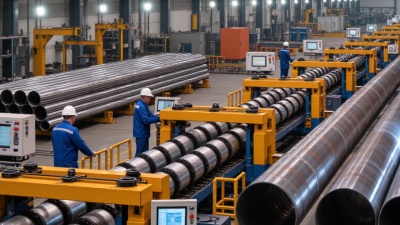
A suitable Automation Tube Mill Pipe Making Machine should match the actual product range. Check tube diameter, wall thickness, steel grade, coil width, and required welding method. A machine producing 20–76 mm tubes is not automatically suitable for 100–200 mm applications. Ask for verified samples, not only catalog photographs. On a production line, a stable weld monitor matters more than a dramatic speed claim.
Research reports also disagree on automation market size. That is worth remembering. Forecasts can describe direction, but they cannot replace a factory trial. Review forming-pass design, servo control, quick-change tooling, PLC diagnostics, energy consumption, and spare-parts availability. Inspect the weld seam under realistic line speed. Measure ovality after sizing and cooling.
Reports from the International Energy Agency and the U.S. Department of Energy continue to emphasize industrial efficiency and digital monitoring. These priorities affect long-term operating costs. A cheaper machine may become expensive through scrap, downtime, and difficult maintenance. The best choice is not always the fastest machine. It is the machine your operators can control, maintain, and improve reliably.
Understanding Automated Tube Mill Pipe Machines in 2026
How to Choose an Automated Tube Mill Pipe Machine in 2026?
Understanding Automated Tube Mill Pipe Machines in 2026
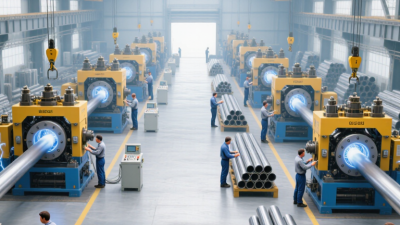
An automated tube mill is more than a forming line with faster rollers. It combines decoiling, welding, sizing, cutting, inspection, and data control. The World Steel Association’s April 2025 Short Range Outlook projected global steel demand growth of about 2.2% in 2026. That pressure makes stable output more valuable than impressive speed alone.
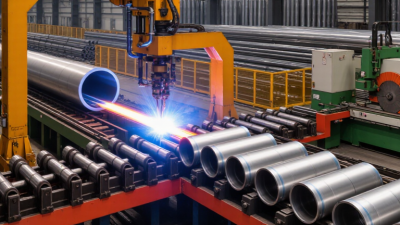
Start with material range and product accuracy. Check the machine’s compatible steel grades, strip thickness, tube diameter, and weld method. Ask for measured tolerances, not brochure language. A practical trial should run your actual coil, including its edge condition and surface oil. Watch the weld seam closely. Small alignment errors can become visible defects after sizing.
Energy and maintenance deserve equal attention. The U.S. Department of Energy’s Industrial Decarbonization Roadmap identifies energy efficiency as a major industrial improvement route. Therefore, compare motor efficiency, standby consumption, compressed-air demand, and changeover time. A line that saves ten minutes per size change may outperform a faster line during mixed production. It is easy to overvalue maximum speed. That is a mistake I would avoid.
Request production records, safety documentation, spare-parts availability, and operator training details. ISO 12100 and ISO 13849 principles can help evaluate machine-risk controls and control-system reliability. Remote monitoring sounds useful, but poor sensor calibration can create false alarms. Leave room for human inspection. Automation is powerful, not infallible.
Defining Production Requirements and Material Specifications
Choosing an automated tube mill pipe machine in 2026 starts with the product, not the machine brochure. Define daily output, pipe diameter range, wall thickness, length, tolerance, and shift pattern. A workshop making 1,000 thin-wall tubes needs different forming stability from one producing heavy structural pipe. Record actual demand, including peak orders and changeover frequency. Production speed alone can mislead. A faster line may create more scrap during frequent size changes.
Material specifications must be equally precise. List steel grade, yield strength, coil width, thickness variation, surface condition, and incoming coil weight. Galvanized, stainless, and carbon steel behave differently during forming and welding. Confirm whether the line supports the required welding method and heat control. Ask for measurable ranges, not vague statements such as “high flexibility.” Review weld quality records, dimensional reports, and trial results from comparable materials. These documents reveal practical limits.
Experienced buyers also calculate tooling, accumulator capacity, cutting accuracy, and maintenance access. Leave space for inspection equipment and safe coil handling. A line that fits the floor plan may still restrict operators. That mistake is common. Test the hardest material and smallest diameter, rather than an easy middle size. Results can change with lubricant, temperature, and operator settings. No specification sheet predicts every production condition. Build acceptance criteria before purchase, including tolerances, output targets, scrap limits, and technical support response time. One detail is easy to miss: future products may need a wider range than today’s order book.
How to use this chart: Select an automated tube mill according to the thickest wall specification required for the target material family. These representative commercial ERW planning ranges are not universal machine limits; final selection should also verify tube outside diameter, steel grade, coil width, yield strength, welding method, line speed, tooling configuration, and changeover requirements.
Evaluating Quality Control, Safety, Maintenance, and Energy Efficiency
How to Choose an Automated Tube Mill Pipe Machine in 2026?
Quality control should begin before the first coil enters the mill. In factory evaluations, I inspect weld consistency, tube diameter, surface finish, and cutting accuracy. A reliable machine records measurements continuously, not only after production stops. Look for sensors that detect strip misalignment, weld temperature changes, and sudden thickness variation. Digital traceability also matters. Operators should connect each batch with settings, inspection results, and maintenance records. A polished interface is not proof of accuracy. Calibration evidence matters more.
Safety must be visible and practical. Guarding should cover rotating shafts, forming stands, and flying cut-off points. Emergency stops need clear access from normal working positions. Interlocked doors should stop hazardous movement quickly. I also check whether maintenance staff can isolate electrical, pneumatic, and hydraulic energy without confusion. Small details matter. Poorly placed cables can create real risks.
Maintenance design affects output and energy use. Choose accessible lubrication points, standard wear components, and diagnostic alerts that explain the fault clearly. A machine that requires dismantling three covers for a simple sensor replacement will lose production time. Variable-speed drives can reduce energy during slower operations, while efficient motors limit heat inside the control cabinet. However, projected savings often look better than actual results. Ask for measured consumption under comparable loads, not attractive estimates. I would also request service records from similar installations. Unexpected noise, rising motor temperature, or repeated weld adjustments may reveal problems before dashboards do.
Selecting Suppliers, Calculating Costs, and Planning Installation
Choosing an automated tube mill pipe machine in 2026 starts with the supplier, not the brochure.
Ask for references from plants producing similar tube sizes and steel grades. Request a recorded factory acceptance test using your actual material. Check forming stability, weld quality, cutting accuracy, and line speed. A supplier should provide electrical drawings, maintenance schedules, spare-parts lists, and operator training. Vague answers deserve caution. Production claims often assume ideal conditions.
Calculate the complete cost before comparing quotations.
Include the mill, tooling, decoiler, accumulator, welding unit, sizing section, cutoff system, installation, freight, duties, and commissioning. Add consumables, replacement electrodes, lubricants, and annual maintenance. Ask how quickly tooling changes between sizes. A lower purchase price may hide expensive changeover labor. Keep a contingency of 10% to 15% for missing site work and modifications. I would challenge every estimated output figure.
Installation planning needs a measured factory layout.
Confirm foundation strength, ceiling clearance, crane access, electrical capacity, compressed air, cooling water, and ventilation. Mark the line center on the floor before delivery. Reserve space for coils, finished pipes, inspection, and safe maintenance access. Schedule alignment and trial production with experienced technicians. Allow extra time. Commissioning rarely follows the perfect calendar. Record test results, train operators on fault recovery, and revise the plan after the first production shift.